
In this article
What distinguishes a medical device?What has the TGA actually listed?What the device entry does not establishQuestions worth checking firstExample: putting the information in contextWhat to check nextFrequently asked questionsDoes any dry-herb vaporiser automatically count as a medical device?Does an ARTG entry make an entire brand medically approved?Read more on this topicOfficial sourcesRelated articles
A medicinal cannabis vaporising device is not defined only by its shape or heating technology. In Australia, the manufacturer’s intended medical purpose, the type of material it is designed to deliver and the relevant regulatory pathway matter more than its appearance.
What distinguishes a medical device?
Medical devices are products intended for specified medical purposes, with a principal action that is not pharmacological, immunological or metabolic. A vaporising device intended to administer medicinal cannabis can fall within this framework. Its intended purpose is documented in claims, labelling and instructions, not created simply because a patient owns it. Two visually similar products can have different regulatory status.
What has the TGA actually listed?
The TGA list updated on 5 June 2026 identifies SyqeAir Inhaler (ARTG 424790), Mighty+ Medic and Volcano Medic 2 (both listed under ARTG 525733), and Grenco Medical Elite II (ARTG 526764). This list is for defined devices and intended purposes. A consumer edition from the same manufacturer must not be treated as interchangeable.
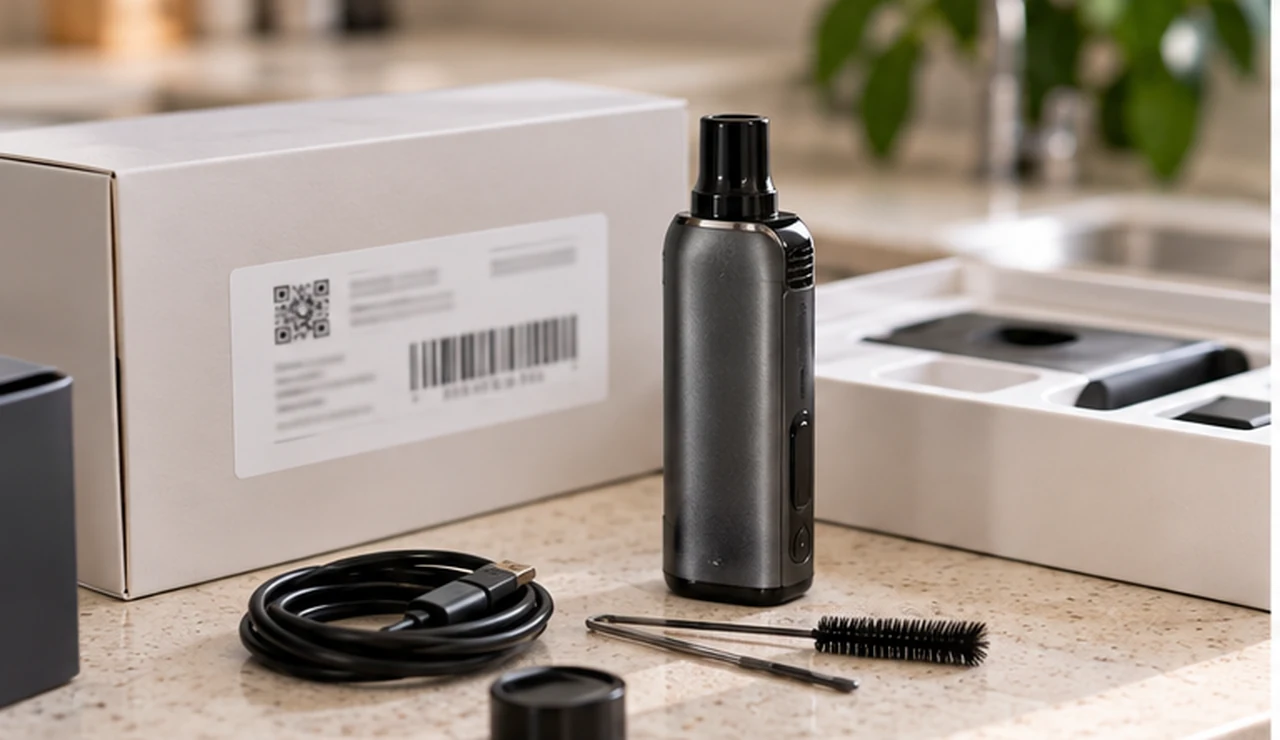
What the device entry does not establish
A device entry does not approve every substance that could fit into a chamber. A registered medical device is distinct from medicinal cannabis medicines, which are governed by medicine rules and medical supervision. Device instructions may limit compatible products, accessories, operating conditions and users. A recommendation to use a different formulation cannot be inferred from device registration.
Questions worth checking first
Verify the exact model name, current ARTG entry, sponsor, manufacturer, intended purpose, instructions for use and current TGA notices. For a patient, the treating health professional is the appropriate source of advice about whether a particular route of administration is clinically suitable. A product webpage or photograph is not sufficient evidence.
Example: putting the information in context
Imagine finding the familiar name of a device brand in an online listing. Instead of assuming that every model from that brand has the same status, compare the model identifier in the packaging and manual against the official ARTG entry. If the names differ, ask the responsible supplier to clarify rather than treating a similar appearance as proof.
What to check next
- Find the exact medical model and Australian ARTG listing, not just the brand name.
- Read the medical device IFU for the specified substance and configuration.
- Discuss clinical suitability and approved treatment with the treating practitioner.
Frequently asked questions
Does any dry-herb vaporiser automatically count as a medical device?
No. Intended purpose and applicable regulatory treatment must be established for the actual device.
Does an ARTG entry make an entire brand medically approved?
No. The entry and its scope must be checked for each relevant kind of device.
Read more on this topic
- Medical Devices & TGA: topic overview
- How to Search the Australian Register of Therapeutic Goods
- ARTG Inclusion vs Other Regulatory Pathways
Official sources
- TGA — Medical devices
- TGA — Medicinal cannabis vaping devices approved in Australia (5 June 2026)
- TGA — Searching the Australian Register of Therapeutic Goods
This educational information is not individual medical advice. It does not establish the regulatory status or suitability of an unidentified device, and must not be read as authorisation to advertise vaping goods to the Australian public.