Explore ZVaporizer collectionsAustralian product & device information
Engineering · Technical knowledge

How Vaporiser Technology Works: Heating, Airflow and Temperature Control

A closer look at heating methods, electronic controls, device components and the principles behind different systems.

Topic collection C0225 articlesUpdated 9 October 2026

A vaporiser is a device that applies heat to a material so that volatile components can enter an aerosol or vapour stream. What happens inside the device depends on the material, temperature, heating design, airflow and contact time. Understanding these principles makes technical specifications easier to interpret and helps explain why different designs behave differently.

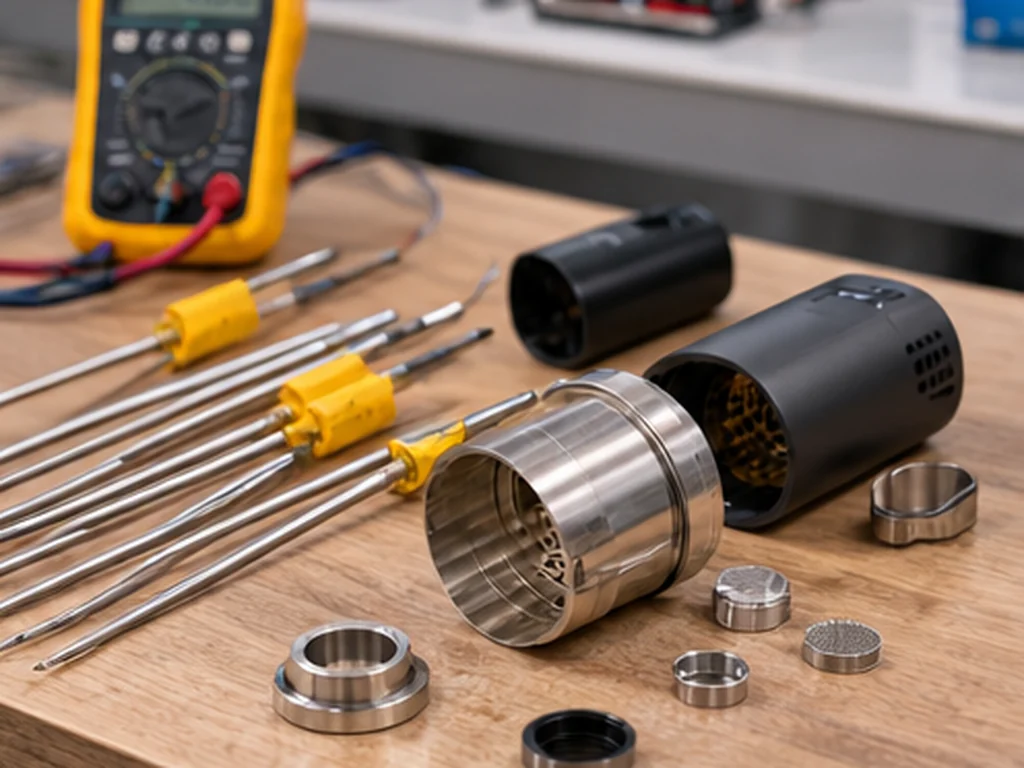
Precision heating chamber and components on a test workbench
Illustrative heating chamber and component photography.

Heating and vaporisation: the basic principle

When energy is transferred to a material, its temperature rises. Components that can become airborne may enter the passing air as vapour, droplets or particles. This is not necessarily the same as producing only pure water vapour, nor does the absence of visible smoke prove the resulting aerosol is harmless.

The device's heat source can be electric, externally heated, or another manufacturer-defined arrangement. Sensors and controls may regulate the heater, but the temperature shown on a screen is not always identical to the temperature of every point within the material.

Conduction, convection and hybrid heating

The three terms describe how heat reaches the material, not how safe a particular device is.

Heating methodHow heat is transferredDesign consideration
ConductionDirect contact with a heated surfaceContact and chamber geometry matter.
ConvectionHeated air passes through or around materialAirflow and heat exchange matter.
HybridUses both mechanismsRelative contributions vary by design and conditions.

Conduction heating

In a conduction-oriented device, a heated chamber wall or contact surface transfers heat through direct contact. Temperature may vary with packing density, surface area, thermal conductivity and how material is positioned. A heater controller can maintain a target sensor temperature without guaranteeing every part of the chamber matches it.

Convection heating

Convection uses moving heated air as a primary heat-transfer mechanism. Airflow resistance, heater location, flow rate and thermal losses influence the heat delivered to the chamber. A design with strong airflow may still show temperature variation during changing operating conditions.

Hybrid heating

Hybrid systems employ conductive surfaces and heated airflow. The label does not describe a universally fixed ratio. It is more useful to examine the manufacturer's engineering documentation than to assume one technology is inherently superior in every respect.

What does temperature control actually measure?

Electronic devices may rely on temperature sensors, resistance-based measurements or embedded control algorithms. The displayed number can refer to a heater target or a sensor reading at a particular location, not necessarily the temperature of the aerosol at the outlet.

Several factors influence performance:

  • Sensor position. A sensor near a heater can respond differently from one near the chamber.
  • Thermal inertia. Heating elements and chamber materials take time to warm and cool.
  • Airflow. Moving air removes heat, changing the system's response.
  • Environmental conditions. Ambient temperature and ventilation alter heat loss.
  • Calibration and control. The accuracy of a display depends on the manufacturer's measurement and control design.

A precise display should not be mistaken for a guarantee of a particular chemical composition in the inhaled aerosol.

Heat-up time versus thermal stability

Heat-up time is the period between starting a device and reaching a defined operating condition. Thermal stability describes how effectively a system maintains its target while conditions change.

A device can reach a setpoint quickly yet still experience fluctuations. Conversely, a slower system may use a larger thermal mass. Neither quality can be judged from a single advertised number without knowing how it was measured.

For medical applications, manufacturers must provide appropriate safety and performance evidence for the intended purpose of the device. A marketing specification is not a substitute for regulatory documentation.

Why airflow matters

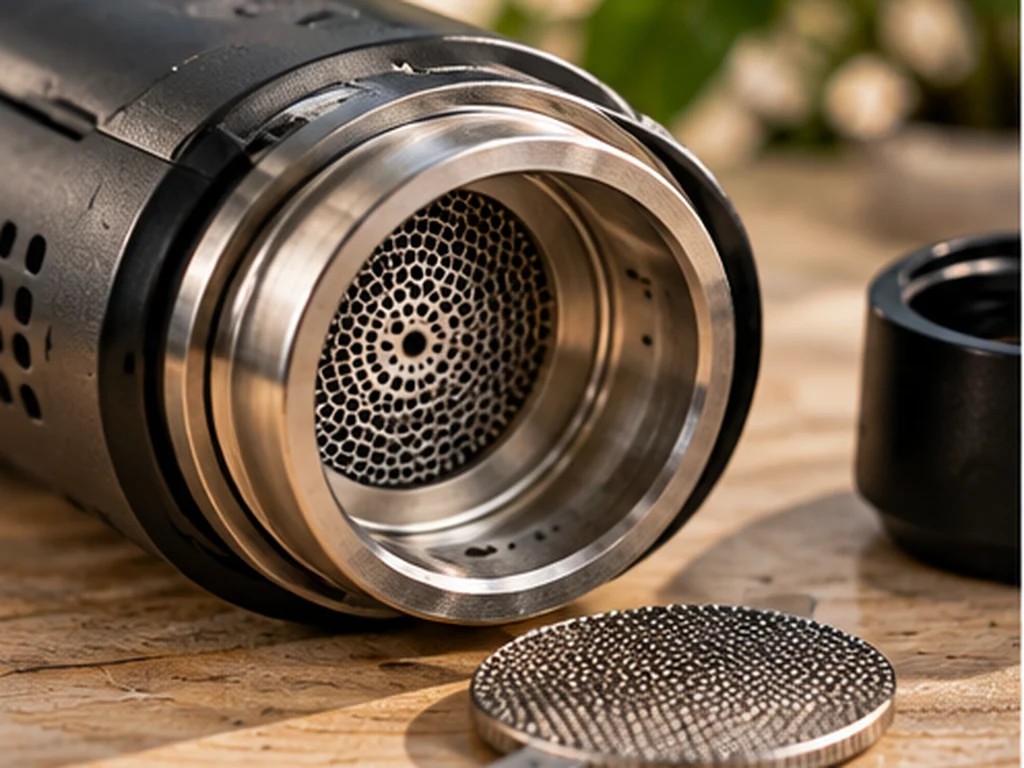
The air path can contain inlets, channels, a heating assembly, filters, seals, a chamber, a cooling section and an outlet. These parts influence pressure drop, thermal behaviour, maintenance requirements and exposure to materials within the flow path.

Airflow restrictions may result from geometry, filters, residue or component misalignment. A damaged seal can affect flow and the functioning of a device. Replacement parts must match the original manufacturer's specifications, especially where the device is a regulated medical device.

Materials: metal, ceramic, glass and polymers

Device components may be made from stainless steel, ceramics, borosilicate glass or engineered polymers. No material is universally suitable at every temperature or for every purpose.

When evaluating a component, relevant questions include its designed temperature range, chemical stability, cleaning compatibility, contact with the flow path and whether it is part of the manufacturer's validated system. For regulated medical devices, intended-use documentation and applicable safety evidence carry more weight than generic claims such as “medical grade” or “food safe”.

Why is material compatibility important?

Heat, cleaning products, mechanical stress and age can affect components. A material that is appropriate for one part of a device may not be suitable elsewhere. Users should follow the device's supplied instructions rather than substituting parts based only on visual similarity.

Portable, desktop and externally heated architectures

Portable electronic devices integrate a compact heater, controller and battery. Their design must balance energy storage, thermal management and available space.

Desktop devices usually draw external power and may have more space for components. Their size alone does not establish better regulatory performance or clinical suitability.

Externally heated devices rely on a heat source outside the device's internal electronics. Their operating characteristics depend strongly on the heat source and design. The absence of a battery does not eliminate the hazards associated with high-temperature surfaces.

These are engineering categories. A device's permitted use in Australia must be assessed separately. See Australian vaporiser regulations.

Understanding product specifications

SpecificationWhat it generally tells youWhat it does not prove
Temperature rangeThe manufacturer's described control rangeUniform material temperature
Heating methodPrincipal heat-transfer approachA health or safety advantage
Battery capacityNominal energy storageActual runtime in every condition
Charge connectionSupported electrical interfaceCompatibility with any charger
Chamber materialMaterial used in a named componentOverall aerosol safety
Medical-device entryAn identified Australian regulatory recordApproval of every related model

Be cautious with comparisons that mix laboratory values, brand claims and user observations without explaining their methods.

Maintenance is part of engineering performance

Residue, worn seals and damaged components can change airflow and heat transfer. These effects make maintenance relevant to the design's expected operation, not just to appearance. Consult the manufacturer's instructions for cleaning and replacement intervals. If the device is used medically, use only components approved for that device and purpose.

Read more in Device safety and maintenance.

Measurement tools and inspected heating components
Heating-device test equipment and components, shown for context.

Engineering explanations here are educational. They are not instructions to use a particular device or a claim that inhaling an aerosol is safe.

Explore Technology & Engineering

Read focused articles on the topics covered by this collection. Each article has its own permanent URL and links back to this guide.

Further reading

Articles in this collection

25 focused articles

Technology & Engineering

Understanding Laboratory Tests for Electronic Heating Devices

Laboratory testing helps separate measurable device performance from impressions or advertising claims. A robust test programme defines the question, the equipment, the operating conditions and the uncertainty before reporting a result.

Read article
Technology & Engineering

Measuring Device Temperature: Surface vs Chamber

The phrase 'device temperature' can refer to several different measurements. A heater sensor, chamber surface, exterior case and flowing air may differ considerably, so meaningful technical comparisons must identify the location and method.

Read article
Technology & Engineering

How to Read Technical Specifications of a Vaporiser

A technical specification is a summary of selected design and performance characteristics. Learning to read the units, definitions and test conditions is more useful than ranking devices by the largest number in a marketing table.

Read article
Technology & Engineering

Vapour and Aerosol Pathways: Engineering Terms

Vapour and aerosol are often used as if they mean the same thing. In engineering and chemistry, they describe different concepts. Clear terminology helps readers interpret device specifications, research and public-health information.

Read article
Technology & Engineering

Why Device Dimensions Affect Thermal Behaviour

Device size influences how heat travels, how much thermal energy can be stored and how components fit together. Dimensions matter, but they do not yield a simple rule that smaller is hotter or larger is better.

Read article
Technology & Engineering

Thermal Cut-off and Overtemperature Protection

Overtemperature protection is designed to respond when a heating device exceeds defined thermal limits or shows an abnormal condition. It is distinct from ordinary temperature regulation: control aims to maintain an operating target, while protection aims to reduce the consequences of faults.

Read article
Technology & Engineering

How Firmware Controls Heating Performance

Firmware is the software running on a device's embedded controller. In a temperature-controlled heating system, it may interpret sensors, adjust electrical power, display status and respond to faults. This makes firmware an important part of performance, but not a substitute for adequate hardware protection.

Read article
Technology & Engineering

USB-C Charging Controllers: What They Do

USB-C describes a connector ecosystem; USB Power Delivery (USB PD) is a separate specification used for negotiating certain power arrangements. A USB-C socket on a portable device does not automatically mean it supports every charger, cable or charging mode.

Read article
Technology & Engineering

Battery Management Systems in Portable Electronics

A battery management system (BMS) is the circuitry and software responsible for monitoring and protecting rechargeable cells. It does not simply estimate battery percentage: depending on the design, it may help enforce voltage, current and temperature limits.

Read article
Technology & Engineering

Mains-Powered vs Battery-Powered Heating Systems

Mains-powered and battery-powered heating systems obtain energy in different ways, which affects size, control and thermal design. Neither power source, by itself, proves superior performance or medical suitability.

Read article
Technology & Engineering

Power Management in Battery-Powered Vaporisers

A battery-powered heater must distribute stored electrical energy among its heater, control electronics, display and protection systems. Because batteries have finite capacity and current limits, power management is fundamental to portable device architecture.

Read article
Technology & Engineering

Understanding Heat-up Time and Thermal Stability

Heat-up time and thermal stability are two different aspects of heating performance. The first concerns how a device approaches an operating condition; the second concerns how its temperature behaves once operating. A short warm-up claim alone does not tell the full story.

Read article
Technology & Engineering

The Role of Thermal Insulation in Device Design

Thermal insulation reduces unwanted heat transfer between a hot region and surrounding components. In compact heating equipment, it is part of an overall strategy that also includes spacing, material selection, electronics layout and protective controls.

Read article
Technology & Engineering

Air Resistance and Draw Pressure: Technical Basics

Air resistance is the opposition encountered as air moves through passages and components. Draw pressure describes the pressure difference driving that movement. The concepts are related, but they should not be treated as interchangeable product ratings.

Read article
Technology & Engineering

Airflow Path Design in Portable Devices

An airflow path is the network of openings, channels and components through which air moves inside a device. Its design influences pressure loss, temperature and which materials may contact the air or aerosol stream.

Read article
Technology & Engineering

How Heating Elements Transfer Energy

A heating element converts supplied energy into heat, after which that energy reaches the intended region through conduction, convection and radiation. Understanding these stages explains why heater wattage and chamber temperature are not interchangeable.

Read article
Technology & Engineering

What Happens Inside a Heating Chamber?

A heating chamber is the region where a device holds a material in relation to a heat source and an airflow pathway. Although it can look like a simple cup or tube, its design combines thermal, mechanical and flow considerations.

Read article
Technology & Engineering

How Temperature Sensors Measure and Control Heat

Temperature sensors turn a physical temperature-dependent property into a signal a controller can interpret. The choice of sensor, its location and the measurement electronics all affect how faithfully the reading represents the region of interest.

Read article
Technology & Engineering

Convection Heating in Vaporising Devices Explained

Convection heating uses moving air or another fluid to carry thermal energy to a material. In compact electronic devices this typically involves a heater upstream of a chamber, but the precise airflow route and heating strategy vary considerably by design.

Read article
Technology & Engineering

Conduction Heating in Vaporising Devices Explained

Conduction heating transfers energy into a material through contact with a warmer surface. In an electronic heating device, the chamber wall may act as both a container and a heat-transfer surface. Understanding this mechanism helps explain why a controller's temperature reading cannot describe every point inside a chamber.

Read article
Technology & Engineering

Heating Chamber Materials: Ceramic, Steel and Glass

Ceramic, stainless steel and glass appear frequently in descriptions of heating chambers. These names are helpful starting points, but no single material label proves that an entire device is suitable for every temperature, substance or cleaning process.

Read article
Technology & Engineering

Lithium-Ion Battery Safety for Portable Vaporisers

Crucial battery safety guidelines for portable dry herb vapes. Learn charging best practices, cell inspection, storage tips, and thermal runaway prevention.

Read article
Technology & Engineering

How Vaporiser Temperature Control Works

Temperature control is the process of measuring or estimating temperature and adjusting heater power to reach a target. It is central to how electronic heating equipment behaves, yet a precise display should not be confused with a direct measurement of every part of a device.

Read article
Technology & Engineering

Convection vs Conduction: Engineering Differences

Conduction and convection describe two routes by which heat moves. They are frequently presented as competing product categories, yet many real systems combine both. A useful comparison starts with energy transfer, measurement conditions and device design rather than a simple winner.

Read article
Technology & Engineering

What Is Hybrid Heating in a Vaporiser?

Hybrid heating is an engineering description for systems in which more than one heat-transfer mechanism makes a meaningful contribution. For vaporising equipment, the phrase often refers to warm chamber surfaces acting together with heated airflow.

Read article

Frequently asked questions

Is convection automatically better than conduction?

No. They are different methods of heat transfer. Performance depends on complete device design, operating conditions and intended purpose.

Does a digital temperature display show the temperature of the vapour?

Not necessarily. It may show the heater target or a sensor reading elsewhere in the system.

Are all vaporisers compatible with oils, liquids and dry materials?

No. Material compatibility is device-specific. Using an unintended substance or attachment can create safety and regulatory concerns.

Does heating without visible smoke make inhalation risk-free?

No. Aerosols may contain substances that are harmful to inhale. The composition and risks depend on materials, operating conditions and exposure.

Why do manufacturers use multiple materials in one device?

Different components require different thermal, mechanical, electrical and cleaning properties. The complete design needs to be assessed, not only an isolated material choice.

Official sources and further reading

  1. TGA — Industry standards and guidance for medicinal cannabis vaping devices
  2. TGA — Medicinal cannabis vaping devices: information for industry
  3. Fire and Rescue NSW — Battery and charging safety

Your cart 0