
In this article
Pressure difference drives airflowWhy narrow paths change resistancePressure drop is a system measurementResistance and thermal behaviour interactHow to compare measurements fairlyHow a repeatable test worksQuestions readers often askIs air resistance the same as airflow rate?Can a clogged component change draw pressure?Explore related engineering topicsReferences and further readingRelated articles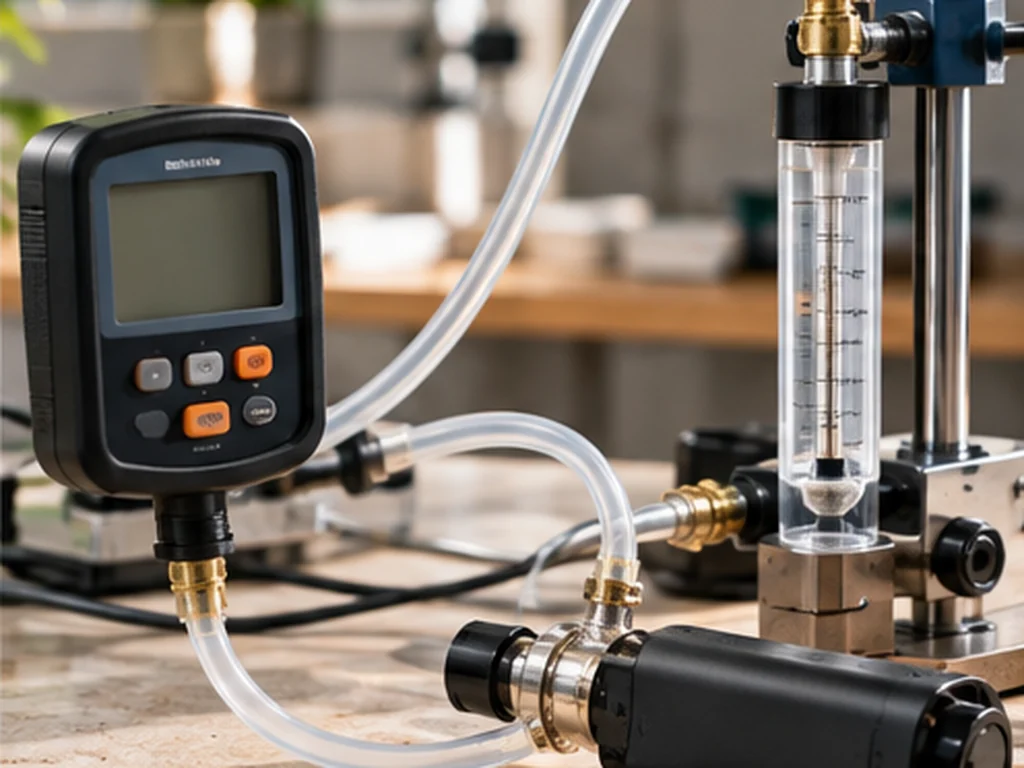
Air resistance is the opposition encountered as air moves through passages and components. Draw pressure describes the pressure difference driving that movement. The concepts are related, but they should not be treated as interchangeable product ratings.
Pressure difference drives airflow
Air generally moves from higher pressure towards lower pressure when a pathway is available. For a particular route, the resulting flow depends on geometry and the resistance introduced by channels, screens and other parts. A pressure-drop measurement states how much pressure difference is needed to sustain a specified flow rate. Without the stated flow rate, a single pressure number is difficult to interpret.
Why narrow paths change resistance
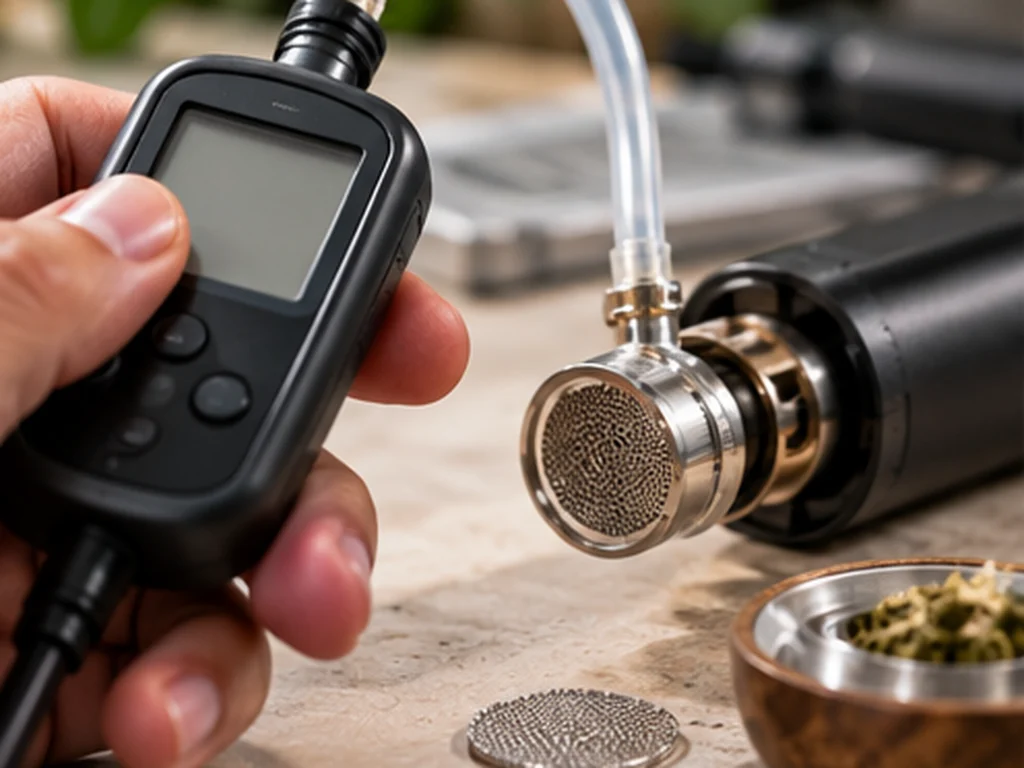
Channel diameter can have a strong influence on pressure drop in simplified laminar-flow models. Real devices may involve abrupt entries, porous material, bends and changing flow, so a simple tube equation may not describe the whole system. Longer passages tend to add frictional loss, while screens and partial obstructions may add local losses. Device testing should capture the assembled system rather than only a detached mouthpiece.
Pressure drop is a system measurement
Flow resistance is not a single permanent number. In many systems it changes with the flow rate, the condition of a screen, temperature and how material is arranged. An engineer can measure pressure difference across the assembly while controlling flow. Two devices tested at different rates cannot be compared fairly. A narrow passage may feel restrictive, but perceived effort is not a calibrated measurement and does not establish aerosol composition.
Resistance and thermal behaviour interact
A restriction can change the airflow entering the heated area and therefore alter energy transport. It may also affect the operation of pressure or flow sensors where fitted. If a screen becomes obstructed, the temperature conditions associated with a nominal test flow may no longer apply. Pressure loss is consequently one part of performance measurement, not just a comfort characteristic.
How to compare measurements fairly
Look for a graph or measurement specifying pressure drop versus flow, the assembled condition and the test method. Terms like 'open draw' and 'restricted draw' are subjective without those details. They do not make statements about emissions safety or medical suitability. Avoid altering sealed flow paths without manufacturer authorisation.
How a repeatable test works
Use controlled flow, a pressure sensor suitable for the range and the same clean or deliberately conditioned components for every measurement. Record tubing, fittings, ambient conditions and whether the chamber is loaded. If the test fixture adds its own resistance, measure or account for it. Repeat the test rather than publishing an isolated reading. This gives a useful engineering view without claiming a particular health effect or outcome.
Questions readers often ask
Is air resistance the same as airflow rate?
No. Flow rate describes the amount moving; resistance describes how much pressure is required to drive it.
Can a clogged component change draw pressure?
Yes. An obstruction can increase pressure loss for the same flow.
Explore related engineering topics
- Vaporiser Technology & Engineering
- Airflow Path Design in Portable Devices
- Understanding Heat-up Time and Thermal Stability
References and further reading
This guide explains engineering concepts, not the safety, emissions profile, legal classification or performance of a particular product.