
In this article
Setpoint, sensed temperature and actual temperatureHow feedback changes heater powerA setpoint is a control requestWhy calibration mattersHow to read control claimsWhat good temperature evidence looks likeQuestions readers often askIs a digital display an independent thermometer?Does a tighter setpoint prove safer emissions?Explore related engineering topicsReferences and further readingRelated articles
Temperature control is the process of measuring or estimating temperature and adjusting heater power to reach a target. It is central to how electronic heating equipment behaves, yet a precise display should not be confused with a direct measurement of every part of a device.
Setpoint, sensed temperature and actual temperature
A setpoint is the controller's desired value. A sensor produces a reading at its location. The actual heater, chamber, material and outlet may all be at different temperatures at the same moment. Differences arise from thermal resistance and the time required for energy to move. Manufacturers may report a display resolution of one degree without claiming accuracy to one degree across the chamber. Resolution, accuracy and uniformity are distinct properties.
How feedback changes heater power
In a closed-loop system, the controller compares measured temperature with the target and adjusts electrical power. Simple control schemes switch power on and off around a threshold; others vary power using more sophisticated algorithms. A disturbance, such as a change in airflow, can cause a temporary difference before the controller responds. Overshoot, settling time and recovery are useful ways to describe this behaviour. Their meaning depends on the sensor position and test arrangement.
A setpoint is a control request
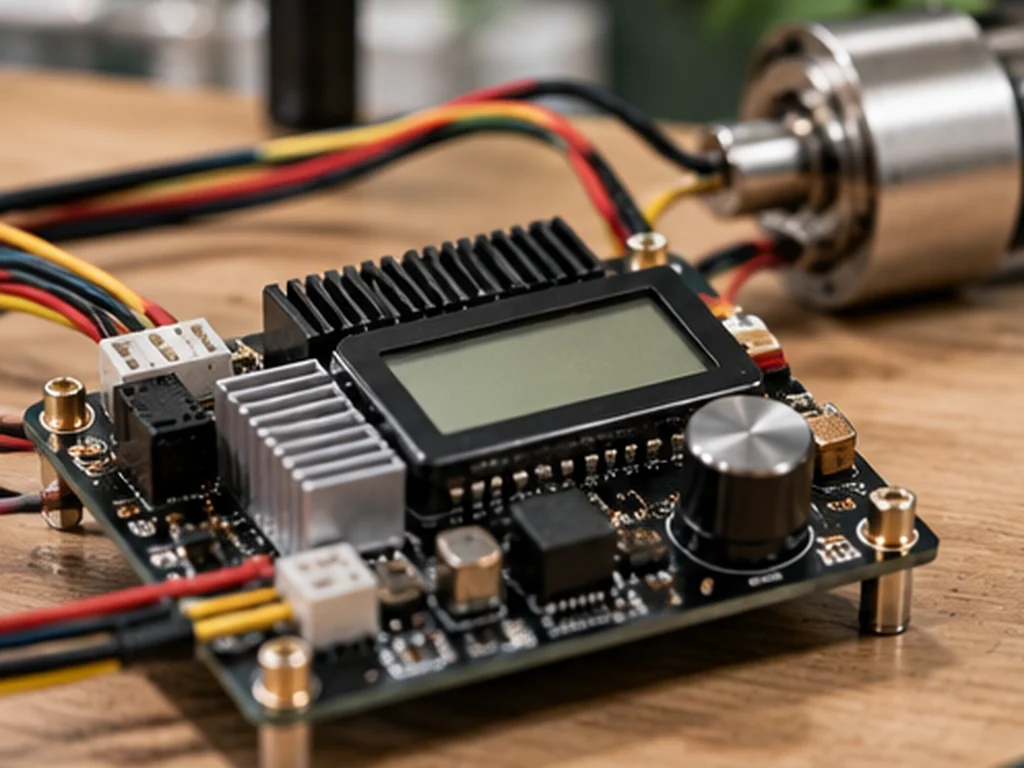
The controller compares a sensor reading with a target and adjusts the electrical input to the heater. During warm-up, the sensor can reach the requested value before every neighbouring component has stabilised. During a sudden change in airflow, the controller may compensate only after it detects a temperature change. Hysteresis, response delay, sensor location and available power all shape this behaviour. The resulting temperature history matters more than a single screenshot of the display.
Why calibration matters
Sensors and electronic measurement circuits have tolerances that may vary over temperature and age. Calibration relates the measured signal to a reference under controlled conditions. It does not automatically remove temperature differences between the sensor and the rest of the device. Manufacturers may also apply software compensation for known offsets. These details are more meaningful than a display that simply shows many digits.
How to read control claims
Look for a documented sensor type, measurement range, tolerance, control location and test conditions. Be cautious when a product lists a temperature range but does not explain what it represents. A setpoint cannot establish the composition or safety of an inhaled aerosol. For a regulated medical device, performance must be considered within its specific intended purpose and evidence base.
What good temperature evidence looks like
A temperature claim is meaningful only when it names the point measured, the method, the tolerance and the operating conditions. A reference thermometer must itself be appropriate for the temperature range and traceable calibration requirements. A reading on an outside metal surface is not interchangeable with a reading within the chamber or in the moving air. Avoid interpreting the setpoint as a precisely known temperature everywhere inside the product.
Questions readers often ask
Is a digital display an independent thermometer?
Not necessarily. It may display the requested target rather than directly measured chamber temperature.
Does a tighter setpoint prove safer emissions?
No. Aerosol composition requires separate evidence, not only temperature-control specifications.
Explore related engineering topics
- Vaporiser Technology & Engineering
- How Temperature Sensors Measure and Control Heat
- How Firmware Controls Heating Performance
References and further reading
- Analog Devices — Temperature sensing engineering resources
- NASA Glenn Research Center — Heat Transfer
- IUPAC Gold Book — Aerosol
This guide explains engineering concepts, not the safety, emissions profile, legal classification or performance of a particular product.