
In this article
The usual idea behind closed systemsHow open systems are describedWhy labels should not be overinterpretedA practical exampleThree points to rememberQuestions people often askDoes open mean any material can be used?Does closed mean maintenance-free?Continue learningSources and further informationRelated articles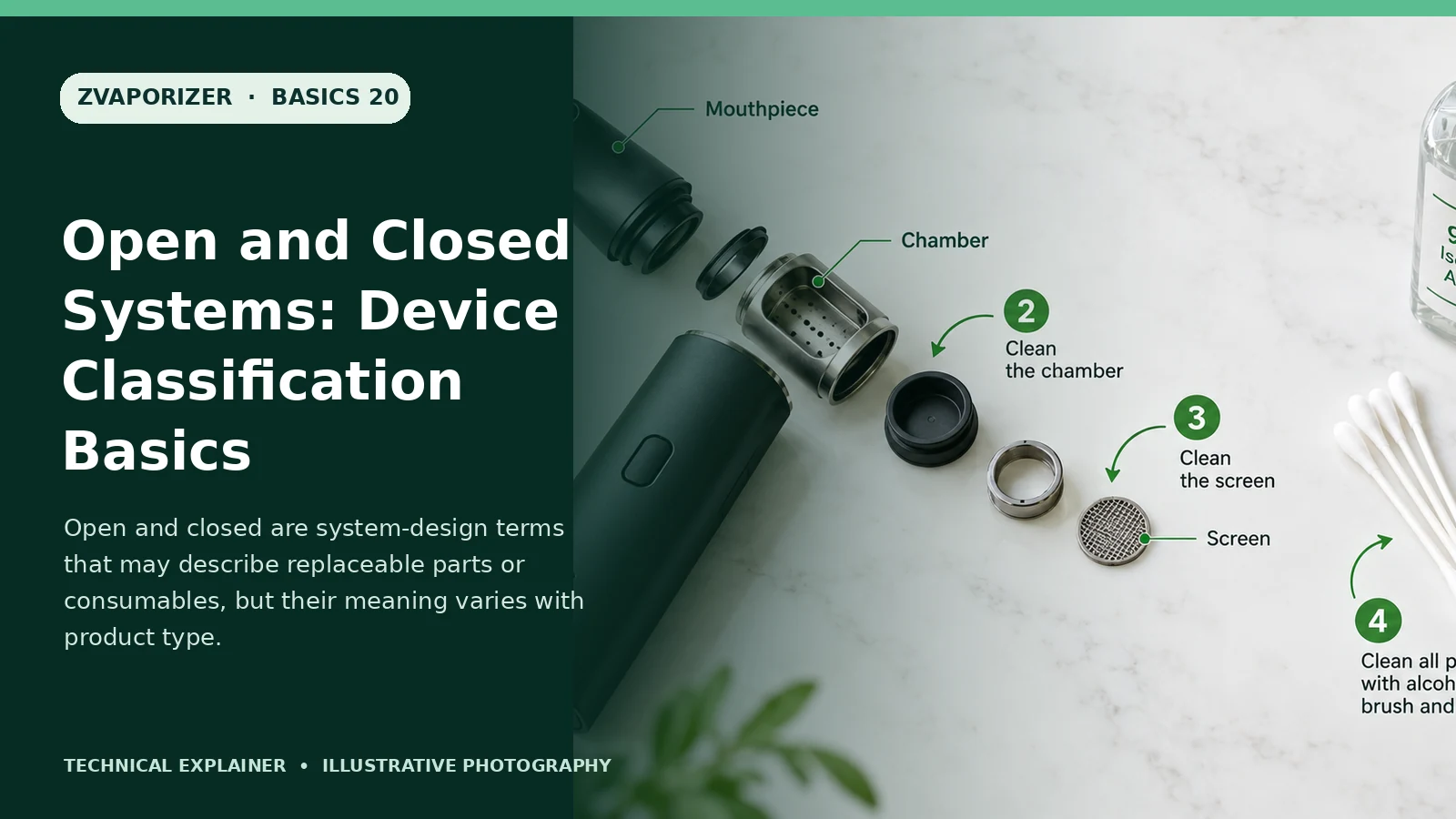
Open and closed are system-design terms that may describe replaceable parts or consumables, but their meaning varies with product type.
The usual idea behind closed systems
A closed system often uses sealed or proprietary consumable modules intended to be replaced as a whole. This can limit which parts a user handles, but it does not guarantee the contents, safety or permitted purpose. The word closed can also refer to a sealed electrical enclosure in a different engineering context.
How open systems are described
Open systems are often described as allowing specified materials or replaceable components to be introduced according to manufacturer instructions. “Open” is not an unrestricted compatibility licence. It does not mean any oil, liquid, powder or dried material belongs in the device.
Why labels should not be overinterpreted
These are market terms rather than comprehensive legal classifications. In Australia, a product must still be evaluated under the relevant regulatory definitions and its intended use. Confirm what the brand means by “open” or “closed”, including authorised components, cleaning arrangements and any tamper restrictions.
A practical example
A system with replaceable prefilled modules may be marketed as “closed”. Its battery enclosure might nevertheless contain service components. The word should not be taken to describe every aspect of hardware access.
Three points to remember
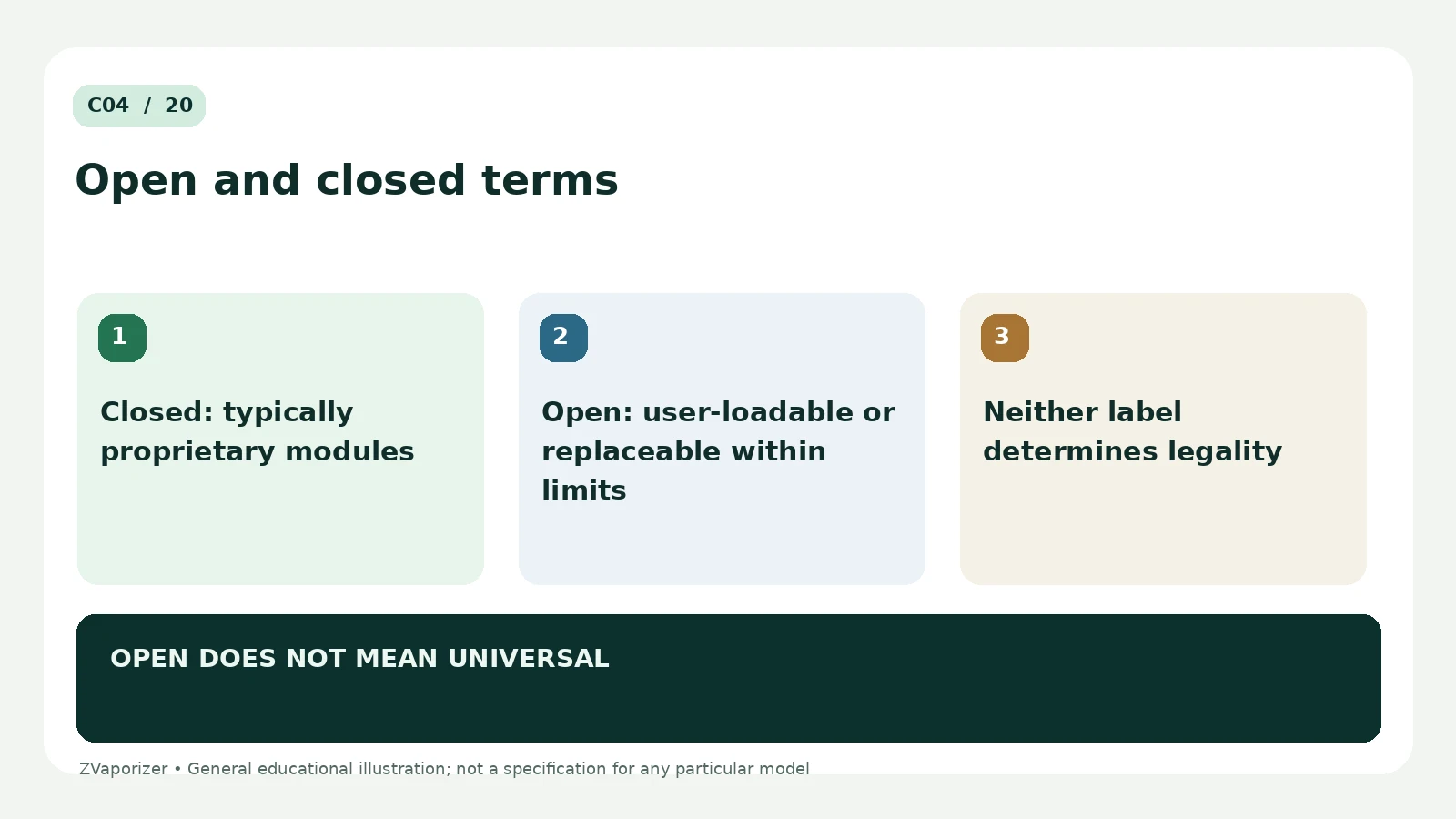
- Closed: typically proprietary modules
- Open: user-loadable or replaceable within limits
- Neither label determines legality
Questions people often ask
Does open mean any material can be used?
No. Manufacturer-specified intended materials still govern.
Does closed mean maintenance-free?
No. External cleaning and inspection may still be required.
Continue learning
- What Is a Removable Battery System?
- What Is an Instruction for Use (IFU)?
- Vaporiser Basics: complete guide
- Australian Laws & Regulations
Sources and further information
This article explains general terminology and engineering concepts. It does not establish the lawfulness, therapeutic suitability, or permitted advertising of any particular product in Australia. Refer to the specific manufacturer’s instructions and current official guidance.