
In this article
What removable actually meansCell compatibility requires more than dimensionsWhen a battery is no longer suitableA practical exampleThree points to rememberQuestions people often askCan sealed batteries be replaced at home?Does cell size guarantee compatibility?Continue learningSources and further informationRelated articles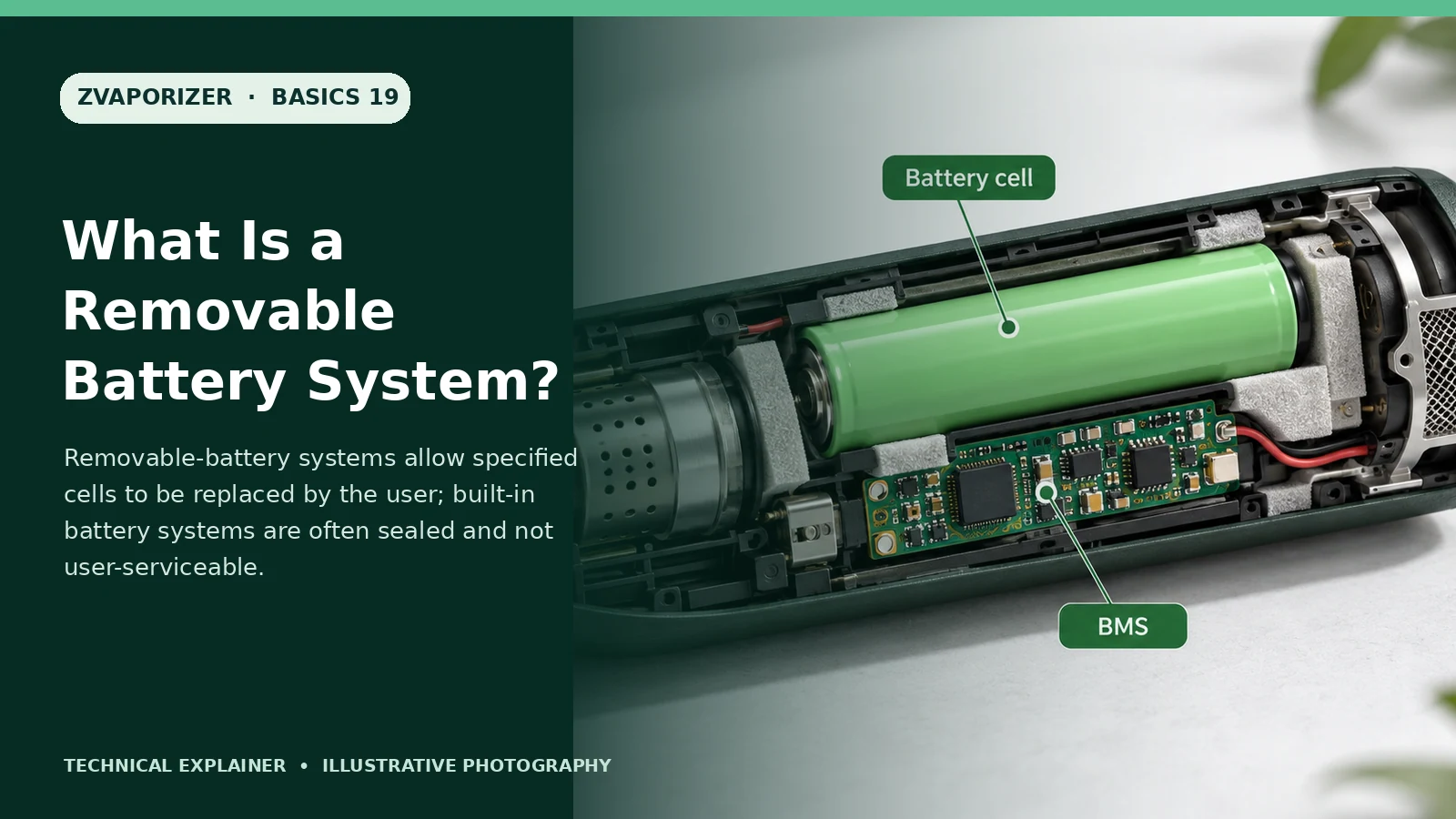
Removable-battery systems allow specified cells to be replaced by the user; built-in battery systems are often sealed and not user-serviceable.
What removable actually means
A removable-battery device is designed with a battery compartment, contacts and authorised cell specifications. This is different from a built-in battery that a technician might access by disassembling the housing. A compartment door is not permission to substitute any battery of similar shape.
Cell compatibility requires more than dimensions
A compatible rechargeable cell must meet the manufacturer’s specified chemistry, voltage, physical format, protection arrangement and current limits. The device’s electrical design matters. Metallic objects can short exposed terminals, so transport and storage require appropriate protection.
When a battery is no longer suitable
Visible swelling, torn insulation, leaks, repeated overheating or other damage are reasons to stop using a battery. Do not puncture it, rewrap it without qualified guidance or discard it in general rubbish. Local battery recycling and hazardous-waste arrangements should be checked, particularly for damaged cells.
A practical example
A person finds a spare cylindrical cell that fits the compartment. Fitting is only one requirement; without confirmation of the permitted cell specification, the replacement should not be used.
Three points to remember
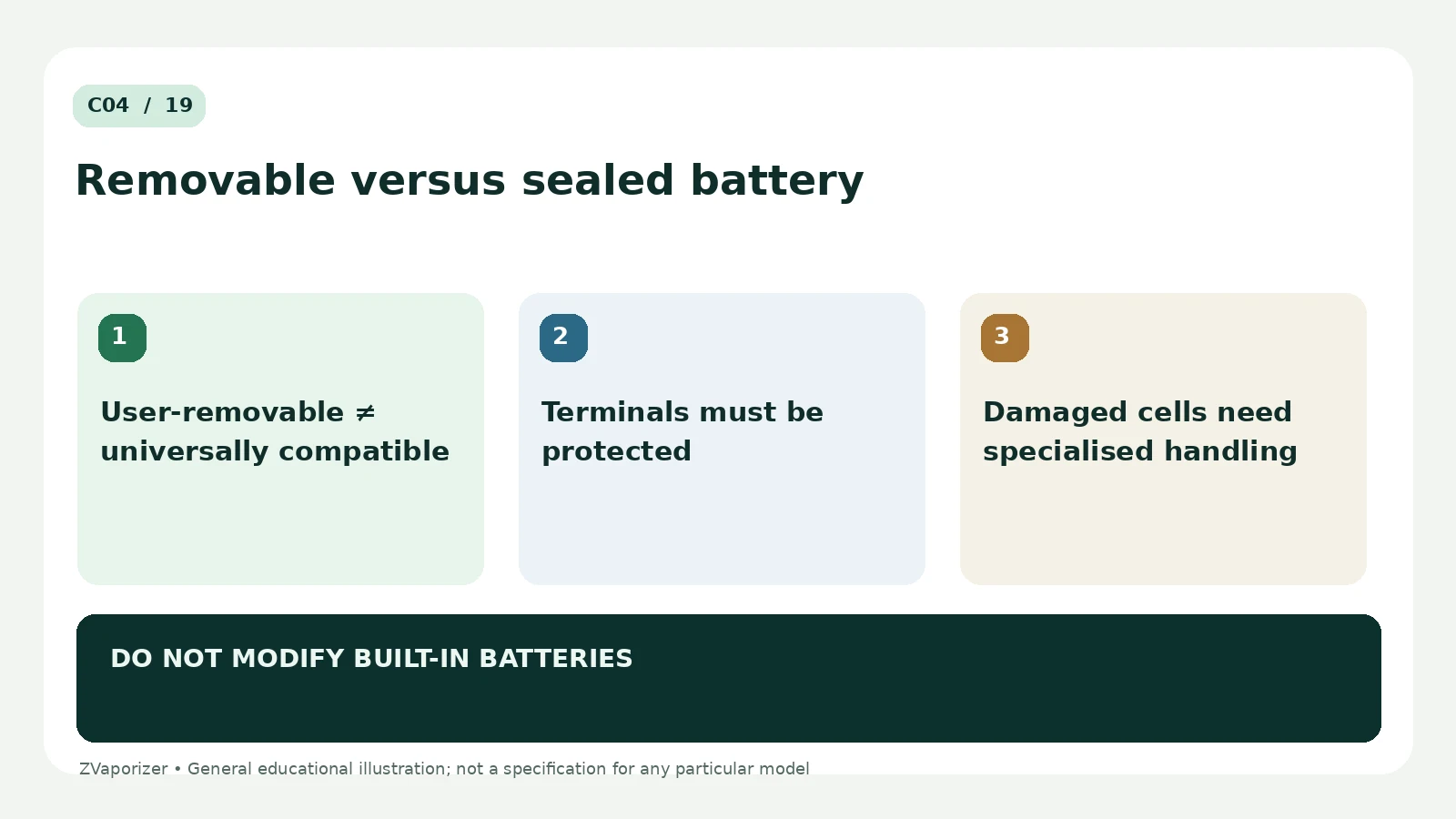
- User-removable ≠ universally compatible
- Terminals must be protected
- Damaged cells need specialised handling
Questions people often ask
Can sealed batteries be replaced at home?
Generally not unless the manufacturer provides a user-serviceable process.
Does cell size guarantee compatibility?
No. Electrical and protection specifications also matter.
Continue learning
- Device Accessories: Common Types and Terms
- Open and Closed Systems: Device Classification Basics
- Vaporiser Basics: complete guide
- Device Safety & Maintenance
Sources and further information
This article explains general terminology and engineering concepts. It does not establish the lawfulness, therapeutic suitability, or permitted advertising of any particular product in Australia. Refer to the specific manufacturer’s instructions and current official guidance.