
In this article
Electrical energy becomes heatCommon building blocksControls and protection are differentA practical exampleThree points to rememberQuestions people often askIs a heater the same as a sensor?Does a screen show the temperature of every surface?Continue learningSources and further informationRelated articles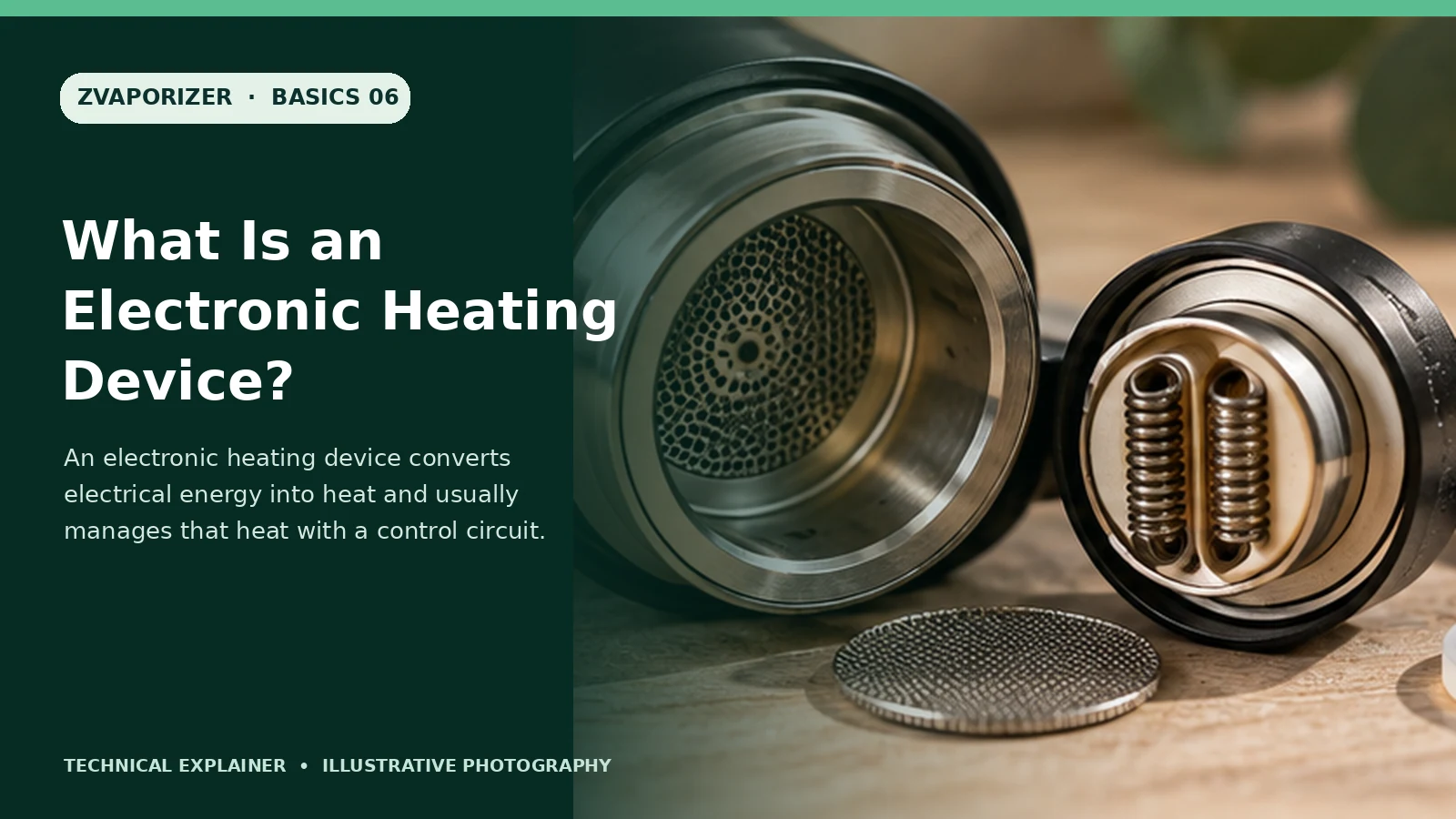
An electronic heating device converts electrical energy into heat and usually manages that heat with a control circuit.
Electrical energy becomes heat
A heater has electrical resistance. When current flows, electrical energy is converted to heat. A controller may regulate the current or switch power to maintain a target condition. This is a broad engineering principle shared by many household products; it does not describe an inhalation purpose on its own.
Common building blocks
A typical design includes power input, a heating element, a temperature sensor or safety thermostat, controls, insulation and enclosure. Some also use batteries or fans. The location of each component changes what its readings mean. A sensor near the heater can report a different temperature from material in a separate chamber.
Controls and protection are different
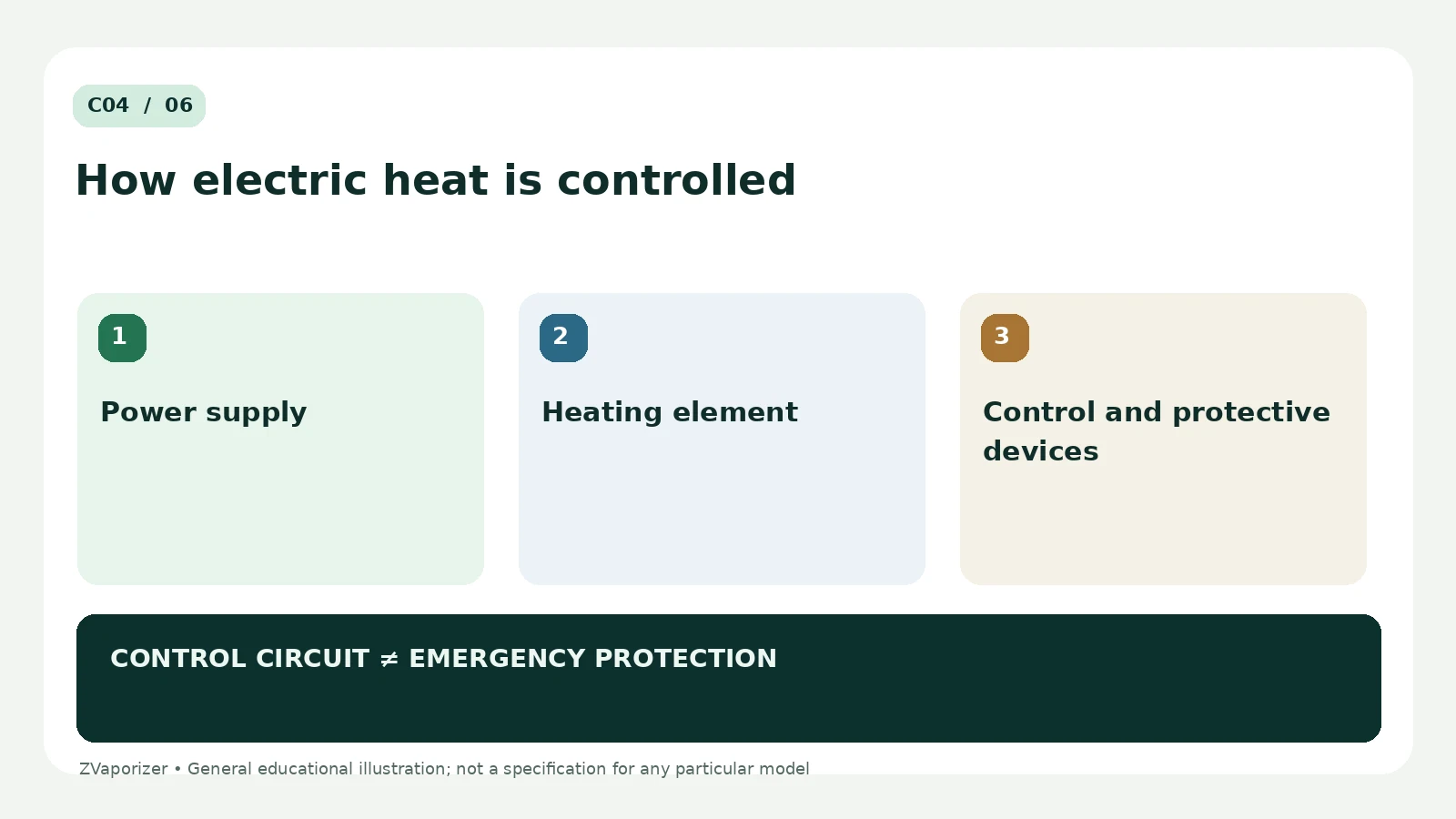
Normal temperature regulation adjusts operation during intended use. A thermal cut-off or protective fuse serves a different role, acting when conditions exceed a defined limit. Users should not bypass protective features. If unexpected heat, damaged wiring or an unusual smell occurs, stop operation and follow the safety instructions.
A practical example
A control screen shows the target temperature while the exterior remains cooler. This is possible because sensors and insulation serve different functions; it is not evidence that every internal surface has the same temperature.
Three points to remember
- Power supply
- Heating element
- Control and protective devices
Questions people often ask
Is a heater the same as a sensor?
No. One supplies heat while the other measures a condition.
Does a screen show the temperature of every surface?
No. Displays generally reflect a defined sensor or calculated value.
Continue learning
- What Is a Dry Herb Vaporiser?
- Vapour, Aerosol and Smoke: What the Terms Mean
- Vaporiser Basics: complete guide
Sources and further information
- NASA — Beginners Guide to Aeronautics: heat transfer
- CSIRO & ACCC — Lithium-ion battery safety report
This article explains general terminology and engineering concepts. It does not establish the lawfulness, therapeutic suitability, or permitted advertising of any particular product in Australia. Refer to the specific manufacturer’s instructions and current official guidance.