
In this article
What a range actually describesSetpoint, reading and accuracy are differentComparing two datasheets fairlyA practical exampleThree points to rememberQuestions people often askDoes a wider range mean a better device?Does a 1°C adjustment mean 1°C accuracy?Continue learningSources and further informationRelated articles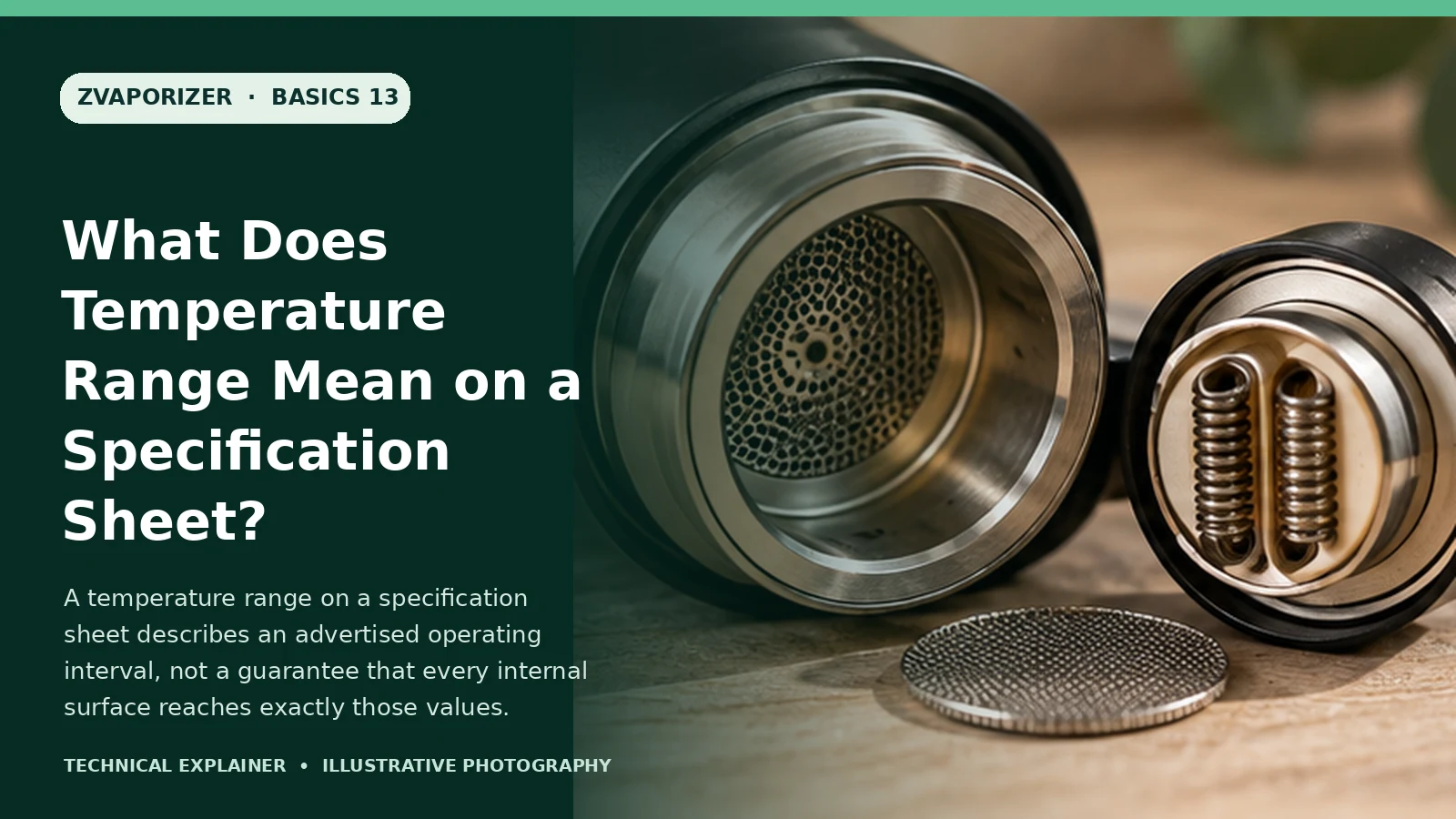
A temperature range on a specification sheet describes an advertised operating interval, not a guarantee that every internal surface reaches exactly those values.
What a range actually describes
A published range may describe available controller targets, sensor readings, or normal operating boundaries. The endpoints indicate what the manufacturer is claiming about an adjustable system; they do not automatically describe uniform material temperature. A specification without measurement conditions is less informative than one that identifies sensor position and tolerance.
Setpoint, reading and accuracy are different
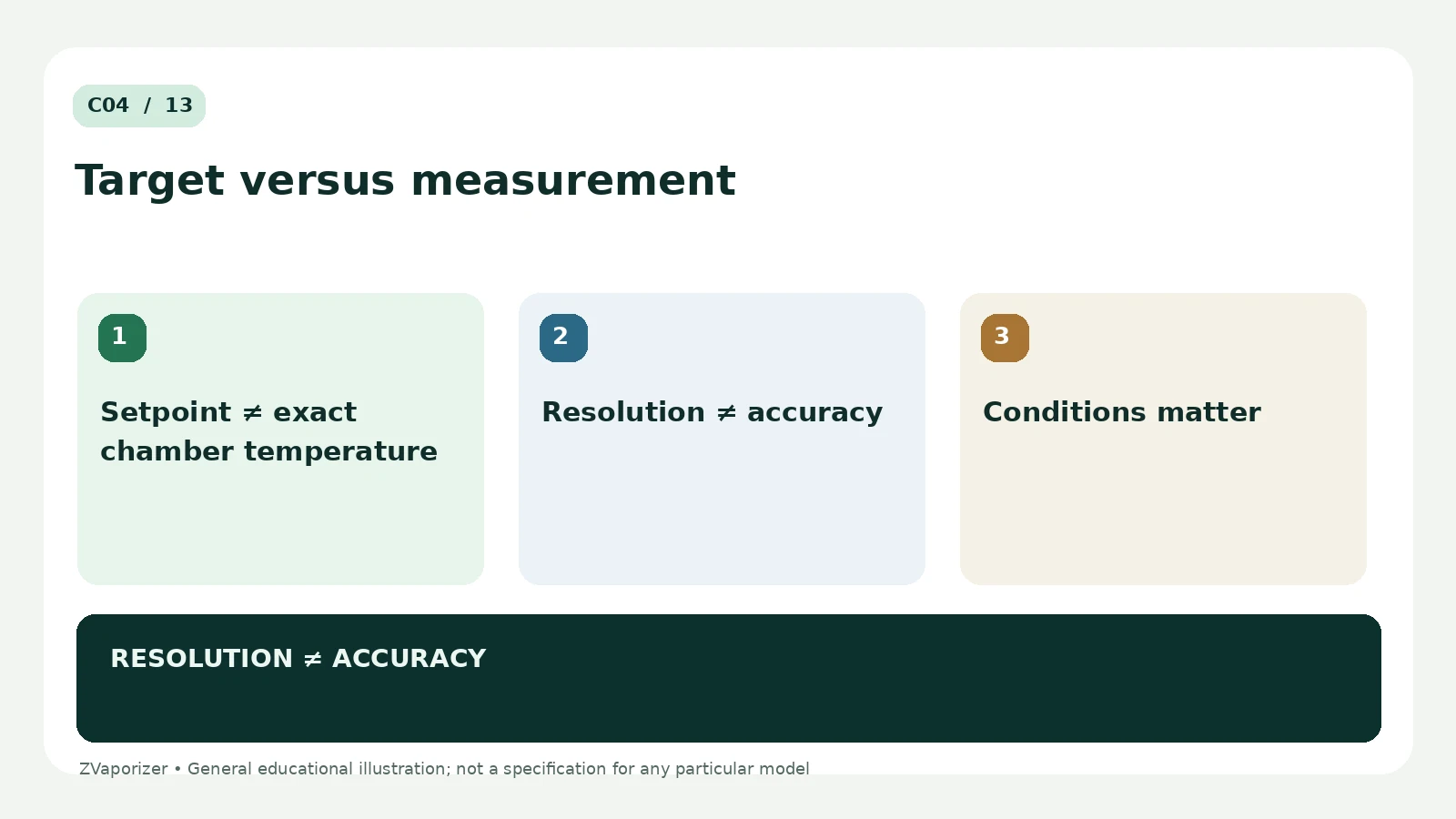
Setpoint is the requested target. A sensor reading is a measurement at a particular point. Accuracy describes how well that measurement or control relates to the defined reference. Resolution describes how finely values may change on a display. A display in one-degree increments is not proof of one-degree accuracy.
Comparing two datasheets fairly
Check the same attributes: unit (°C or °F), operating range, whether the controller uses a chamber sensor, stabilisation conditions and any declared tolerance. A wider range is not proof of better device performance or appropriateness for a particular material. Manufacturers’ intended-use statements remain primary.
A practical example
One datasheet states “40–210°C adjustable”; another reports “sensor error ±3°C” at defined conditions. These statements describe different properties. A consumer should not compare the two numbers as if they represent equivalent accuracy.
Three points to remember
- Setpoint ≠ exact chamber temperature
- Resolution ≠ accuracy
- Conditions matter
Questions people often ask
Does a wider range mean a better device?
Not by itself. Measurement method and intended purpose matter.
Does a 1°C adjustment mean 1°C accuracy?
No. Display resolution and measurement accuracy are separate.
Continue learning
- Understanding Device Temperature Units: Celsius and Fahrenheit
- Understanding Device Size, Weight and Dimensions
- Vaporiser Basics: complete guide
Sources and further information
This article explains general terminology and engineering concepts. It does not establish the lawfulness, therapeutic suitability, or permitted advertising of any particular product in Australia. Refer to the specific manufacturer’s instructions and current official guidance.