
In this article
Never use an ordinary household binNot every device belongs in a B-cycle boxTreat badly damaged batteries differentlyA practical checklistAn everyday situationA detail worth rememberingWhen to stop and seek adviceFrequently asked questionsCan I place a whole vape in a B-cycle collection box?Should I tape terminals on a badly swollen cell and drop it off?Related readingSources and further informationRelated articles
Australian battery recycling rules distinguish normal loose batteries from damaged cells and complete vaping devices.
At a glance: Keep batteries out of household rubbish and kerbside recycling. Protect loose battery terminals using B-cycle guidance.
Never use an ordinary household bin
Lithium-ion batteries can spark or catch fire when crushed in rubbish trucks and recycling equipment. Keep used batteries out of regular garbage and kerbside recycling. Australia’s B-cycle scheme accepts many common loose household batteries at accredited collection points. Before a normal loose battery is taken for recycling, follow its guidance to tape exposed terminals and use suitable, non-metal storage away from heat and children.
Not every device belongs in a B-cycle box
B-cycle explicitly states that complete vapes and e-cigarettes are not accepted at its ordinary drop-off points; ask the local council or transfer station about appropriate options. Integrated batteries inside a complete device may require specialist e-waste handling. Never dismantle a sealed lithium-ion device just to remove a cell for convenience. Requirements for commercial volumes or workplace disposal can also differ from household guidance.
Treat badly damaged batteries differently
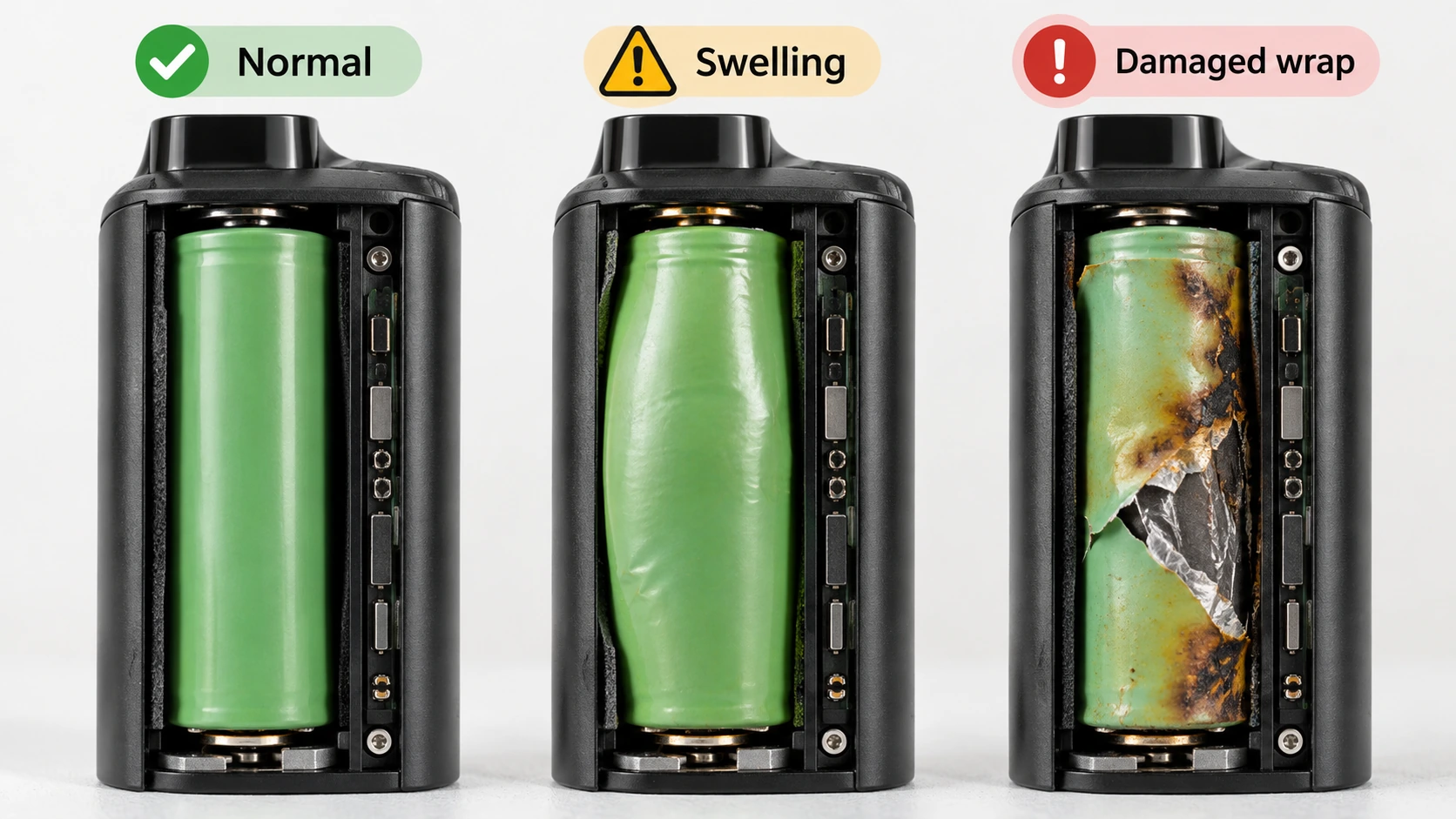
Swollen, crushed or badly damaged batteries should not be placed in regular B-cycle drop-off boxes. B-cycle recommends contacting the local council or transfer station and using appropriate fire-resistant handling arrangements for affected batteries. If the item is actively hot, smoking or venting, do not transport it: move to safety and call emergency services on 000. Good recycling protects waste workers as well as the household.
A practical checklist
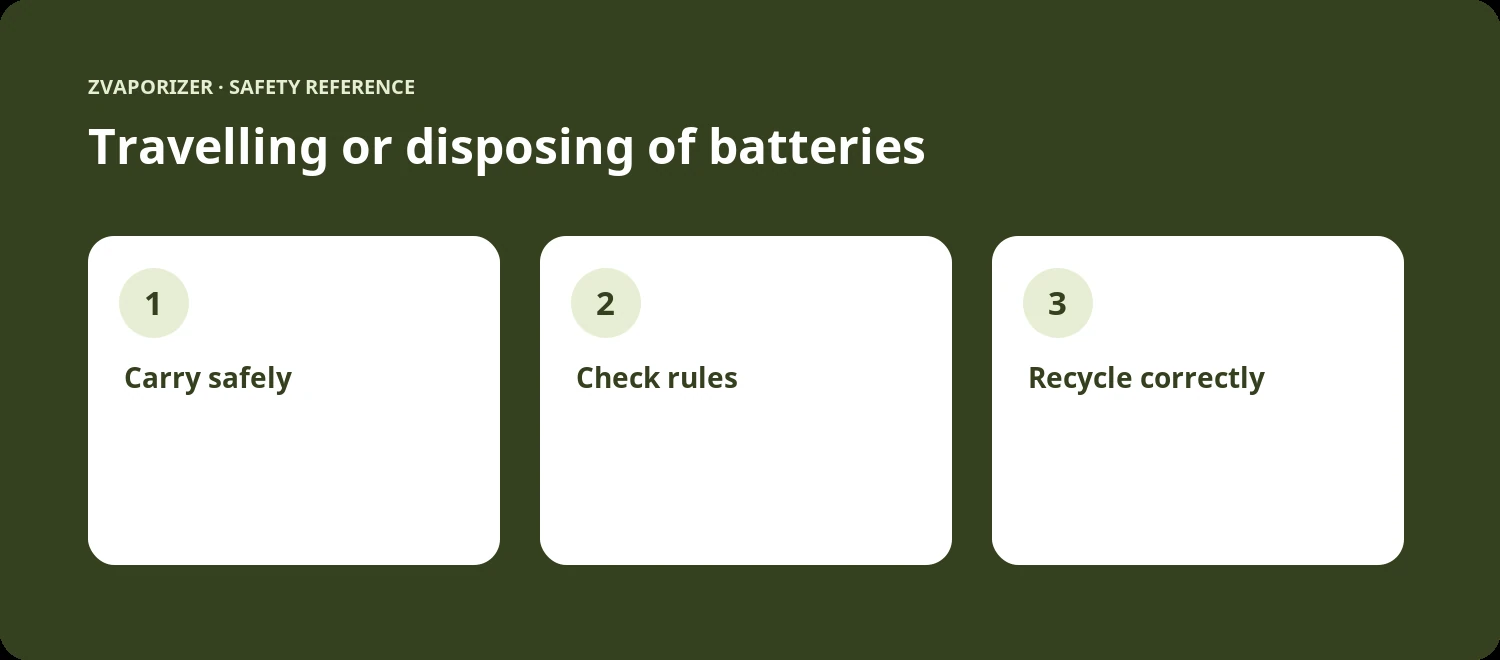
- Keep batteries out of household rubbish and kerbside recycling.
- Protect loose battery terminals using B-cycle guidance.
- Ask council about whole devices and damaged batteries.
- Never transport a smoking, venting or unusually hot battery.
An everyday situation
An owner wants to recycle a complete device that contains an inaccessible lithium battery. A nearby shop has a B-cycle battery bin, but the scheme specifically excludes whole vapes. The appropriate next step is to check council e-waste and hazardous-waste pathways, not force the device into a battery slot.
A detail worth remembering
Severe swelling or overheating changes the disposal route. Ordinary drop-off staff should not be presented with a damaged battery without prior arrangement and safe handling advice.
When to stop and seek advice
| What you notice | Sensible response |
|---|---|
| Normal maintenance question | Check the official manual for the exact device model. |
| Possible deterioration or persistent fault | Stop the activity and contact the supplier or manufacturer. |
| Heat, swelling, venting, smoke or fire | Prioritise safety; for an active hazard evacuate and call **000**. |
Frequently asked questions
Can I place a whole vape in a B-cycle collection box?
No. B-cycle says complete vapes and e-cigarettes are not accepted at its drop-off points.
Should I tape terminals on a badly swollen cell and drop it off?
Do not use an ordinary drop-off point for badly damaged cells; consult your council about safe handling.
Related reading
- Vaporiser Device Safety & Maintenance Explained
- Transporting Devices with Lithium-Ion Batteries
- How to Check for Product Safety Recalls
- Lithium-Ion Battery Safety in Portable Devices
Sources and further information
- B-cycle — Battery safety and recycling
- B-cycle — Recycling FAQs
- ACCC Product Safety — Lithium-ion batteries guide
This general safety information does not replace a manufacturer’s instructions or an emergency service’s advice. It does not establish the permitted supply, advertising or use of any particular vaping good in Australia.