
In this article
Everyday transport starts with preventing damageFlights have stricter requirementsCheck the journey, not just the batteryA practical checklistAn everyday situationA detail worth rememberingWhen to stop and seek adviceFrequently asked questionsCan I put spare lithium batteries in checked baggage?Can I charge a vape on the plane?Related readingSources and further informationRelated articles
Road travel and flights require different checks for installed batteries, spare cells and vaping devices.
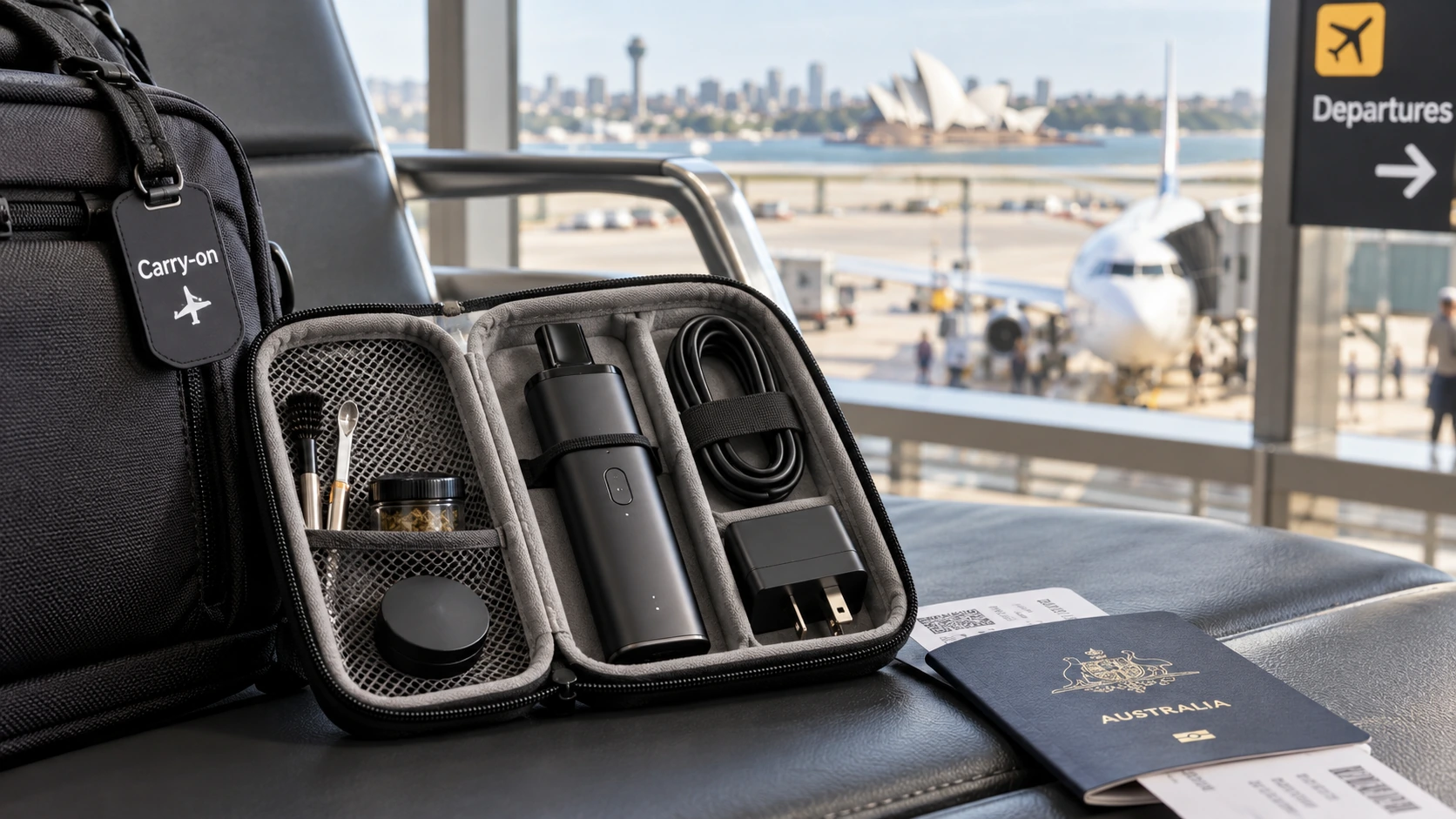
At a glance: Protect against accidental activation, drops and crushing. Carry spare lithium batteries in cabin baggage with isolated terminals.
Everyday transport starts with preventing damage
Switch off the device and prevent accidental activation before putting it in a bag. Keep it away from keys or metal objects that could contact exposed terminals of a spare cell. A rigid or manufacturer-approved protective case can help prevent crushing, but must not trap an active or hot device. Avoid leaving lithium-powered electronics in the sun or a parked vehicle. Do not transport a battery that is damaged, swollen, leaking or unusually hot as normal luggage.
Flights have stricter requirements
Australia’s Civil Aviation Safety Authority (CASA) advises carrying spare lithium batteries and power banks in cabin baggage, not checked luggage, with terminals individually protected. Vapes and e-cigarettes must be carried in cabin baggage and must not be charged in the cabin. Rules for ordinary battery-powered devices can differ, so identify the actual device category rather than assuming every portable electronic item follows the same condition. Airlines may impose additional restrictions, and rules for travel to other countries can be different.
Check the journey, not just the battery
Before departure, consult CASA Pack Right, the operating airline and destination-country rules. Legal possession and permission to carry a device are separate from flight dangerous-goods restrictions. Keep model specifications available if the airline asks about battery capacity. If a cell is removable, protect its terminals exactly as required rather than leaving it loose beside coins or keys. Never attempt to conceal a restricted item or ignore crew instructions.
A practical checklist
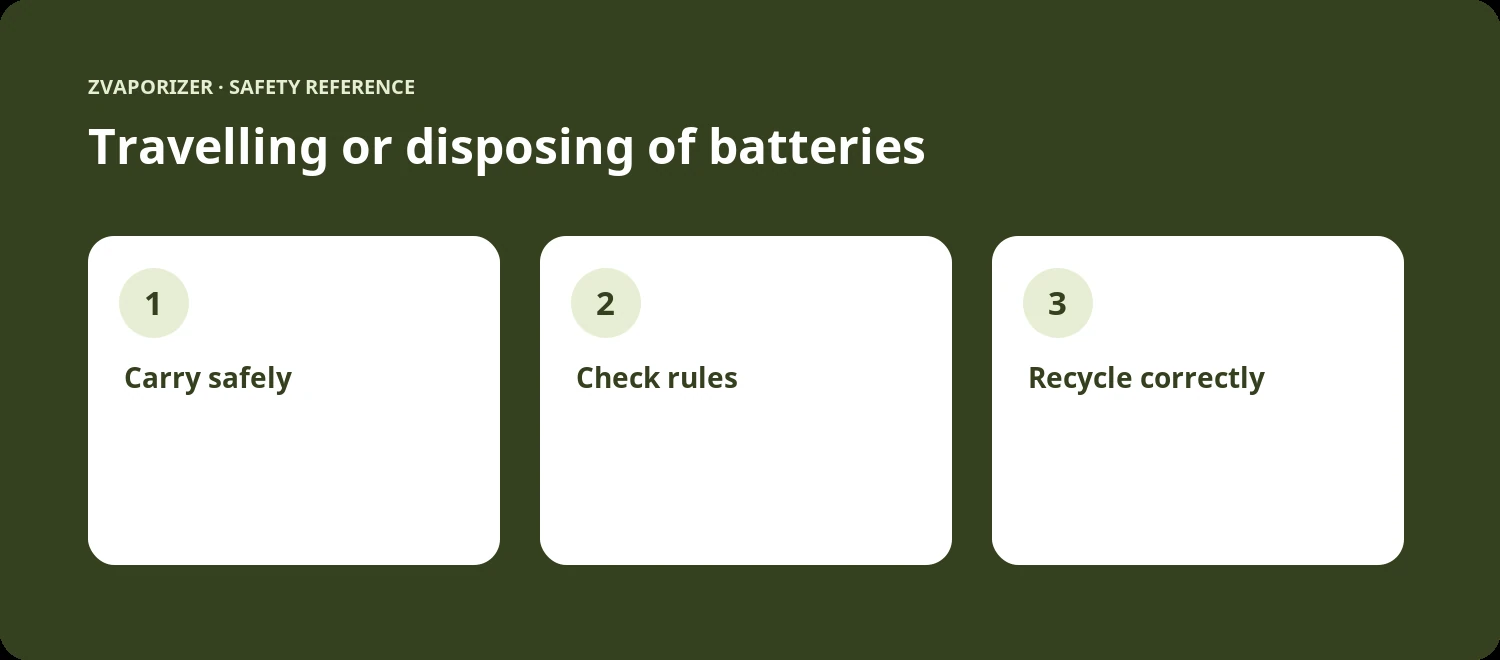
- Protect against accidental activation, drops and crushing.
- Carry spare lithium batteries in cabin baggage with isolated terminals.
- Do not charge a vape or e-cigarette on board an aircraft.
- Check CASA, your airline and destination law before travelling.
An everyday situation
A passenger packs an installed lithium-powered electronic device and several loose spare cells. The installed device and spare batteries may be subject to different airline rules, and vapes have specific cabin-only restrictions. Checking CASA and the airline before reaching the airport prevents a last-minute decision about dangerous goods.
A detail worth remembering
A battery’s watt-hour rating matters for airline transport, but a compliant size alone does not override rules about item category, charging on board, destination law or battery condition.
When to stop and seek advice
| What you notice | Sensible response |
|---|---|
| Normal maintenance question | Check the official manual for the exact device model. |
| Possible deterioration or persistent fault | Stop the activity and contact the supplier or manufacturer. |
| Heat, swelling, venting, smoke or fire | Prioritise safety; for an active hazard evacuate and call **000**. |
Frequently asked questions
Can I put spare lithium batteries in checked baggage?
No. CASA states that spare batteries and power banks must be carried in the cabin.
Can I charge a vape on the plane?
No. CASA prohibits charging e-cigarettes in the aircraft cabin.
Related reading
- Vaporiser Device Safety & Maintenance Explained
- Safe Battery Disposal and Recycling in Australia
- How to Check for Product Safety Recalls
- Lithium-Ion Battery Safety in Portable Devices
Sources and further information
- Civil Aviation Safety Authority — Lithium batteries
- Civil Aviation Safety Authority — Vape baggage rules
- ACCC Product Safety — Lithium-ion batteries guide
This general safety information does not replace a manufacturer’s instructions or an emergency service’s advice. It does not establish the permitted supply, advertising or use of any particular vaping good in Australia.