
In this article
Know the stop-use situationsPrepare an effective first messageUnderstand your other reporting optionsA practical checklistAn everyday situationA detail worth rememberingWhen to stop and seek adviceFrequently asked questionsMust the written warranty still be active to raise a safety concern?Should I keep using the device while support replies?Related readingSources and further informationRelated articles
A device fault may be routine support, a safety issue or a recall concern. Know which deserves urgency.
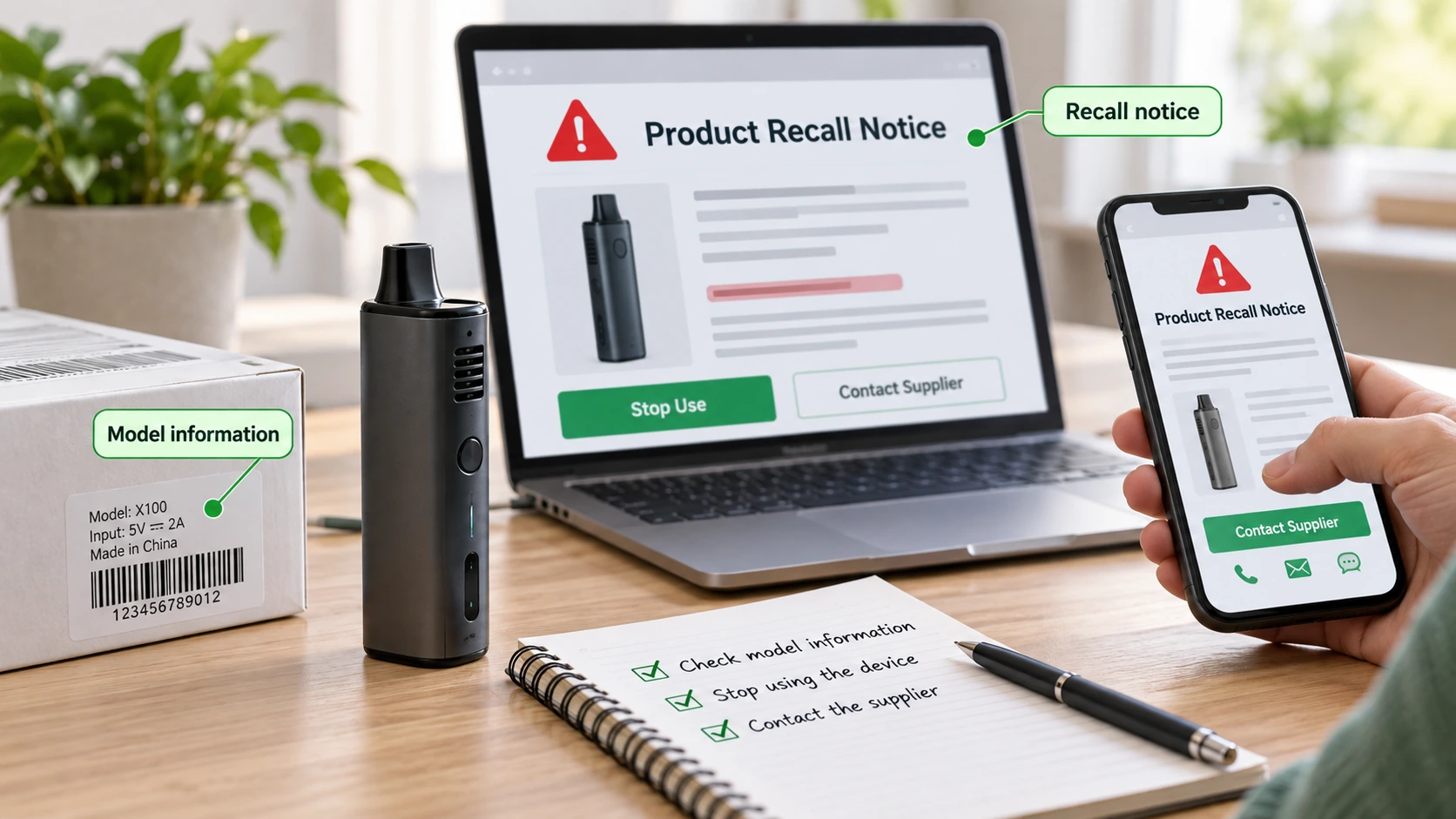
At a glance: Stop using a product with safety-related fault symptoms. Prepare model, error code, event history and safe photos.
Know the stop-use situations
Contact a manufacturer or supplier promptly if the device shows unusual heat, damaged electrical connections, repeated unexplained shutdowns, moisture ingress or visible deterioration. A swollen, leaking, venting or smoking battery requires stronger precautions: stop use and charging immediately, keep clear and seek emergency help for an active incident. Do not wait for warranty eligibility to be confirmed before taking the safe action.
Prepare an effective first message
Provide the exact model and revision, concise symptom description, dates, error codes and any relevant history. Ask specifically whether use must stop, what safe storage is recommended and whether the item is subject to a recall or service bulletin. If the product contains a rechargeable battery, ask for approved return packaging and shipping guidance before sending it. Avoid sending an actively hazardous item through routine post.
Understand your other reporting options
A supplier may provide technical support, but product safety concerns can also be reported to ACCC Product Safety. If the unit is a medical device, the TGA may accept an incident report from consumers or healthcare professionals. Keep records of correspondence and the manufacturer’s instructions. Australian Consumer Law guarantees are separate from voluntary manufacturer warranty periods, so an expired written warranty does not automatically settle your rights.
A practical checklist
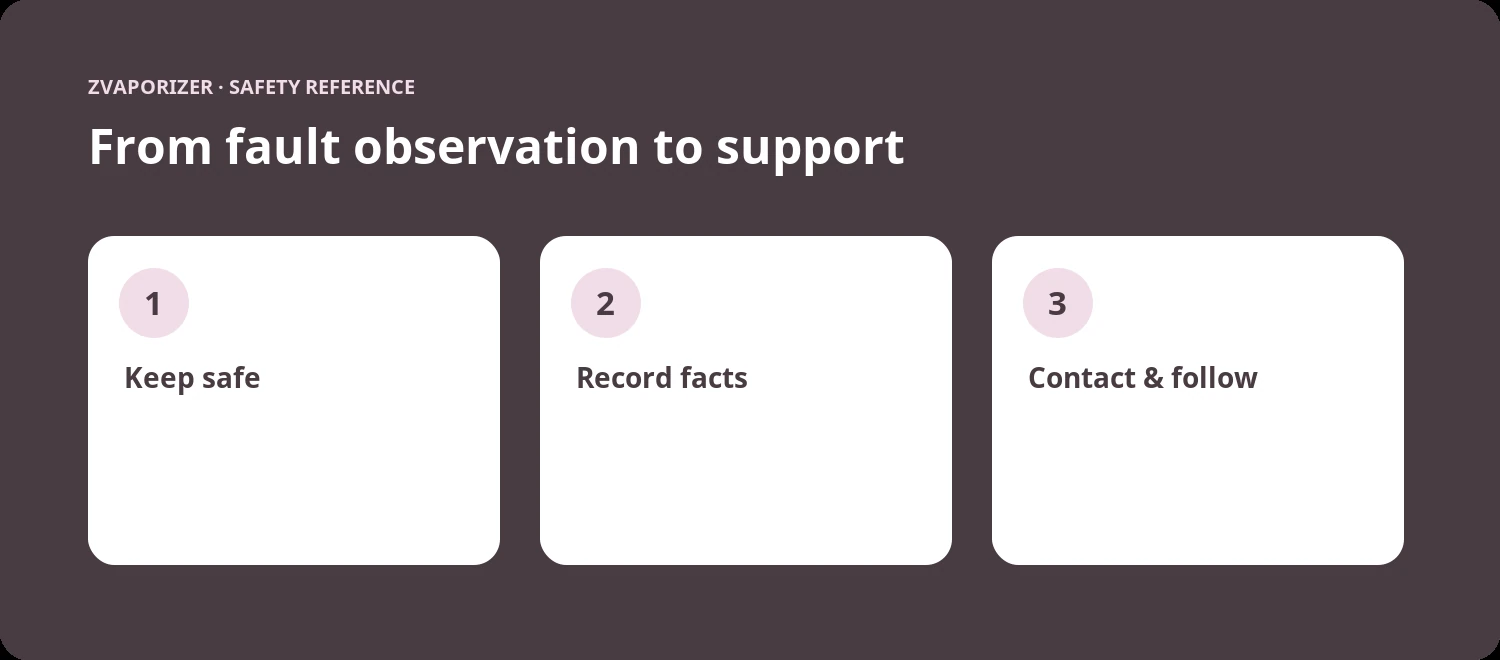
- Stop using a product with safety-related fault symptoms.
- Prepare model, error code, event history and safe photos.
- Request safe return instructions for battery-containing goods.
- Use ACCC or TGA reporting pathways when relevant.
An everyday situation
A unit smells unusual during charging. The owner stops using it and asks the manufacturer whether any safety notice applies, while preserving the serial number and purchase record. This is preferable to continuing use while hoping the problem disappears or repeatedly trying other adaptors.
A detail worth remembering
Support conversations and official incident reporting can run in parallel. A consumer may report a safety concern even before a formal recall or warranty decision exists.
When to stop and seek advice
| What you notice | Sensible response |
|---|---|
| Normal maintenance question | Check the official manual for the exact device model. |
| Possible deterioration or persistent fault | Stop the activity and contact the supplier or manufacturer. |
| Heat, swelling, venting, smoke or fire | Prioritise safety; for an active hazard evacuate and call **000**. |
Frequently asked questions
Must the written warranty still be active to raise a safety concern?
No. Reporting a safety issue and Australian Consumer Law rights are not confined to a voluntary warranty period.
Should I keep using the device while support replies?
Not if there are safety warning signs or instructions to stop use.
Related reading
- Vaporiser Device Safety & Maintenance Explained
- Recording Device Faults for Manufacturer Support
- How to Read Warranty and Maintenance Terms
- Lithium-Ion Battery Safety in Portable Devices
Sources and further information
- ACCC Product Safety — Respond to recalls and unsafe products
- ACCC — Warranties and consumer guarantees
- TGA — Report an adverse event or safety problem
This general safety information does not replace a manufacturer’s instructions or an emergency service’s advice. It does not establish the permitted supply, advertising or use of any particular vaping good in Australia.