
In this article
Make wear checks part of normal careDecide whether the part is user-serviceableAvoid replacing parts blindlyA practical checklistAn everyday situationA detail worth rememberingWhen to stop and seek adviceFrequently asked questionsCan I repair a cracked casing with glue?Should I replace a repeatedly failing part again?Related readingSources and further informationRelated articles
Recognising ordinary wear helps you distinguish routine replacement from a fault that needs qualified service.
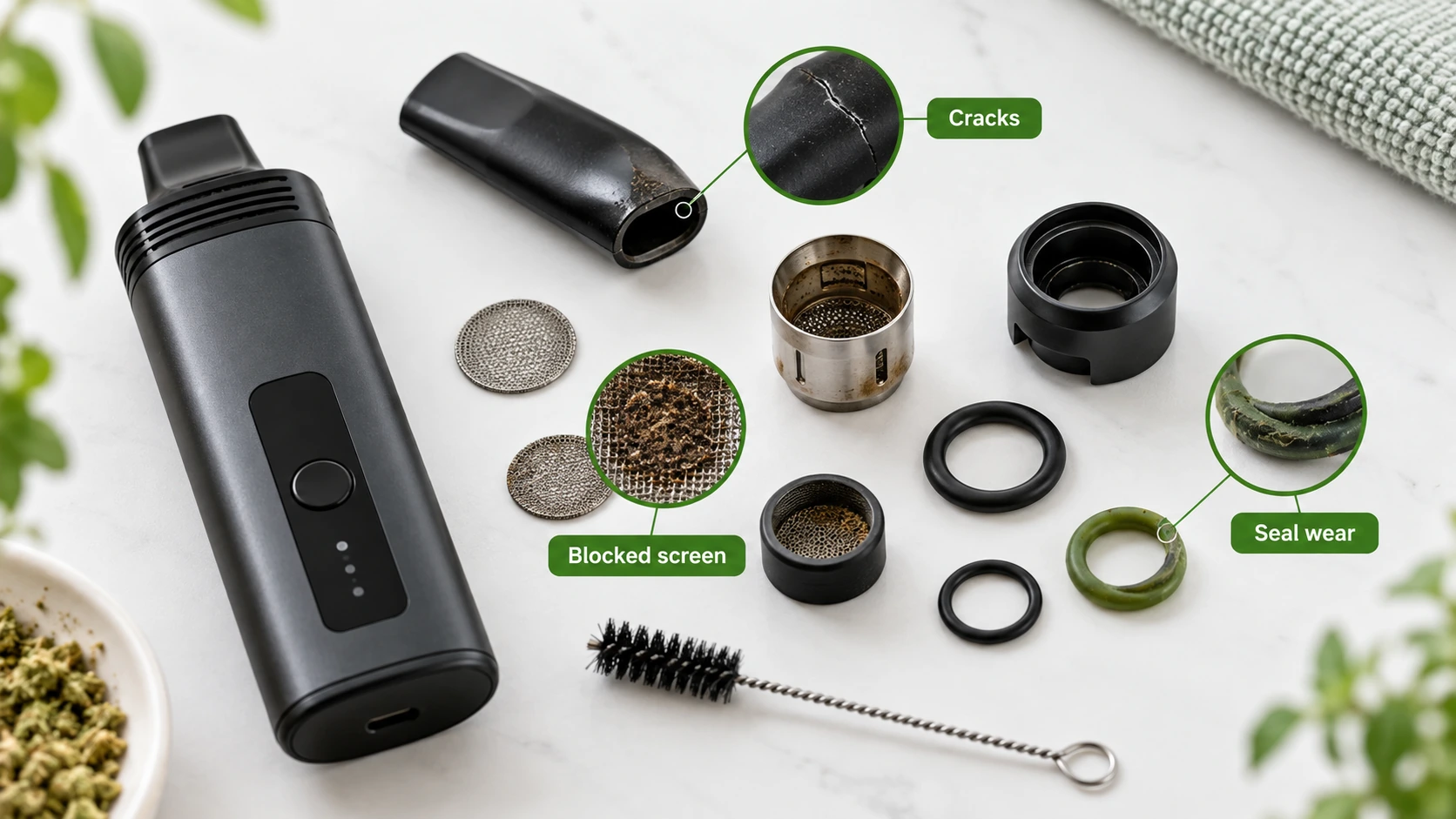
At a glance: Inspect accessible parts against manual-defined wear signs. Separate consumable maintenance from electrical repairs.
Make wear checks part of normal care
User-serviceable screens, seals, detachable covers and connectors may show gradual changes in fit or condition. Look for cracks, corrosion, excessive looseness, fraying and other changes compared with the original part. Do not infer that every darkened or stained component is unsafe; refer to the manufacturer’s inspection criteria. By contrast, a burnt power port, deformed enclosure or swollen battery is not routine consumable wear.
Decide whether the part is user-serviceable
A replaceable screen and an internal heater are different maintenance categories. Manufacturers commonly list approved replacement parts and procedures, while sealed electronics may require specialist intervention. Avoid improvised repairs, glues, sanding, substituted wires and altered fuses. If you are unsure whether a component can be removed safely, document its condition and ask the supplier before attempting disassembly.
Avoid replacing parts blindly
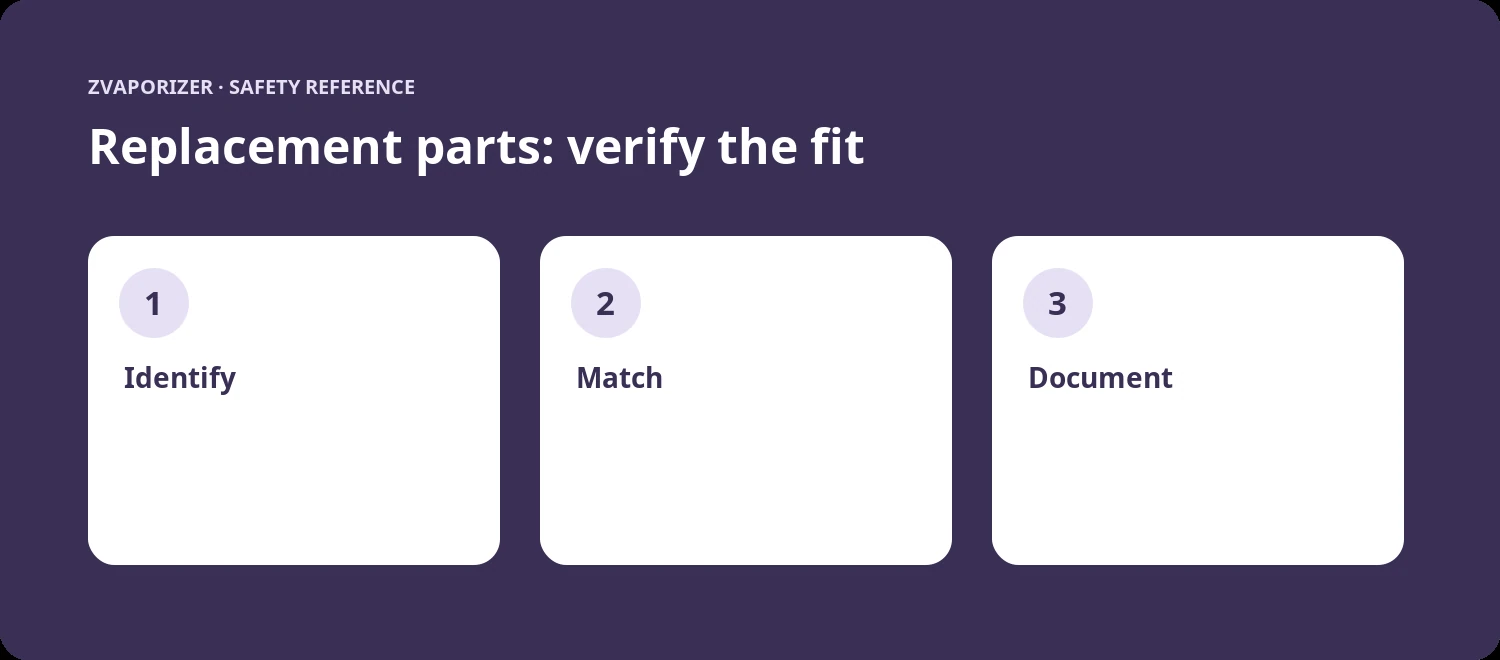
Repeated failure of the same component can indicate an underlying misalignment or operating fault. Confirm model, part number, dimensions and instructions before replacement. After installation, check only the functional items the manual asks users to verify; do not run informal electrical tests or defeat interlocks. If the device behaves differently or makes an unusual sound, discontinue use and seek support rather than applying additional force.
A practical checklist
- Inspect accessible parts against manual-defined wear signs.
- Separate consumable maintenance from electrical repairs.
- Use the correct model-specific replacement part.
- Seek support for recurring faults or distorted housings.
An everyday situation
A user replaces a small screen several times, only to find the same component repeatedly shifting out of place. Rather than keep buying replacements, they document the problem and ask whether the surrounding mount or alignment needs assessment. Repeated damage often deserves more attention than a single normal wear event.
A detail worth remembering
A damaged casing, power connector or battery is not simply a consumable. Maintain a clear distinction between documented user replacement and work that requires a trained professional.
When to stop and seek advice
| What you notice | Sensible response |
|---|---|
| Normal maintenance question | Check the official manual for the exact device model. |
| Possible deterioration or persistent fault | Stop the activity and contact the supplier or manufacturer. |
| Heat, swelling, venting, smoke or fire | Prioritise safety; for an active hazard evacuate and call **000**. |
Frequently asked questions
Can I repair a cracked casing with glue?
Not without a manufacturer-approved method. Adhesives may affect heat resistance, electrical isolation or fit.
Should I replace a repeatedly failing part again?
First ask the manufacturer whether an underlying fault may be responsible.
Related reading
- Vaporiser Device Safety & Maintenance Explained
- Replacement Part Compatibility: How to Check
- Avoiding Unsafe Chargers and Power Adaptors
- Lithium-Ion Battery Safety in Portable Devices
Sources and further information
- ACCC Product Safety — Lithium-ion batteries guide
- Therapeutic Goods Administration — Determining whether content is advertising
This general safety information does not replace a manufacturer’s instructions or an emergency service’s advice. It does not establish the permitted supply, advertising or use of any particular vaping good in Australia.