
In this article
Check exact identity before compatibilityWhy materials and ratings matterRecord installation detailsA practical checklistAn everyday situationA detail worth rememberingWhen to stop and seek adviceFrequently asked questionsWill parts from an earlier model always fit a new revision?Is a third-party part automatically unsafe?Related readingSources and further informationRelated articles
Matching a replacement part requires more than a similar shape, name or online photograph.
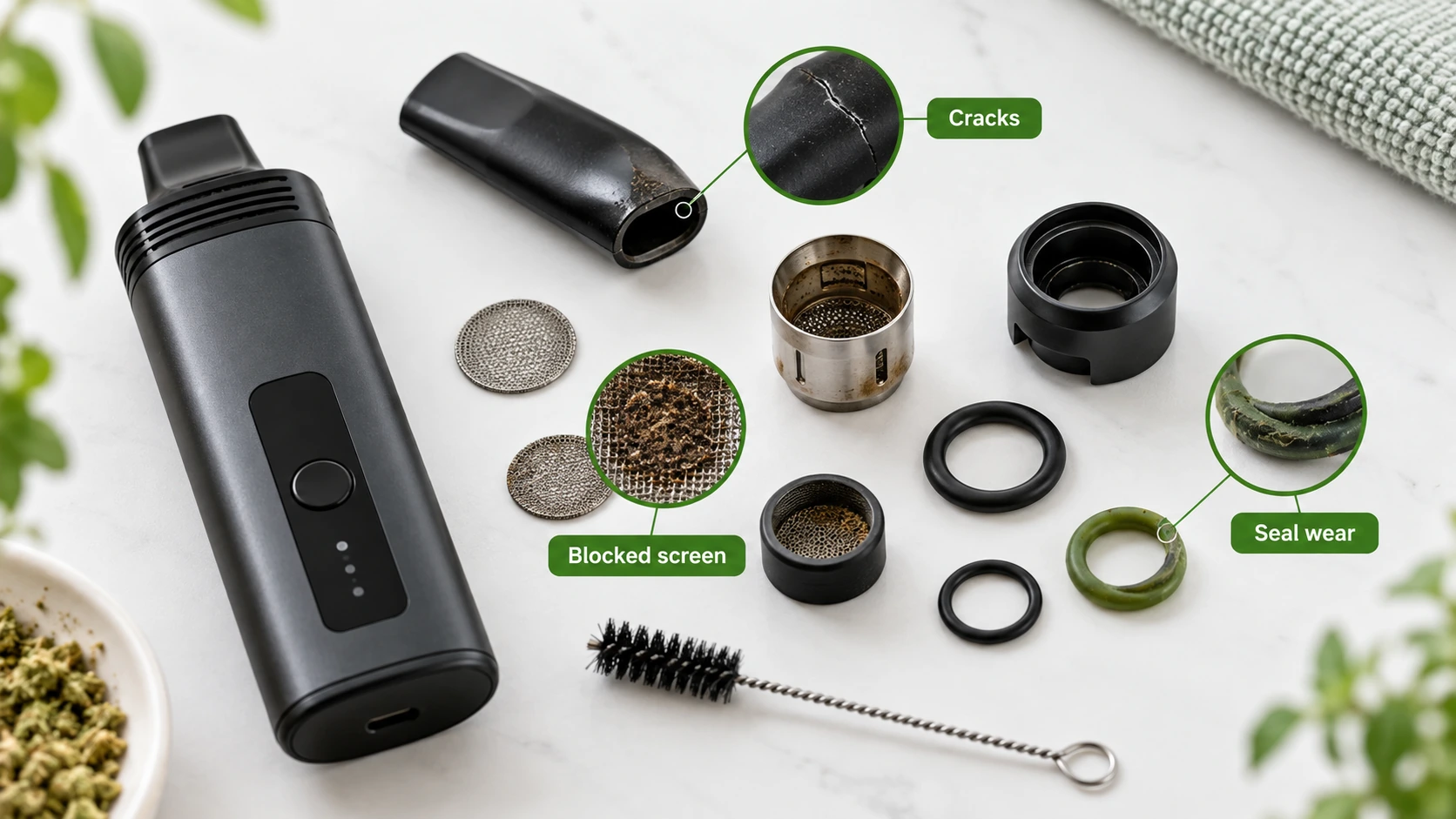
At a glance: Identify exact model, revision and authorised part number. Check material, rating and intended location—not shape alone.
Check exact identity before compatibility
Find the device model, hardware revision and manufacturer part number in the official documentation. Some models share a brand name but not the same seal diameter, battery chemistry, temperature rating or mounting detail. A product description such as “universal” is not a substitute for a written compatibility statement. If the maker provides a serial-number lookup, use it to distinguish revisions.
Why materials and ratings matter
A part near heat, power or a regulated medical pathway may need a specific material or design. Dimensions alone do not establish safe interchangeability. Batteries should never be substituted merely because they fit a compartment; charger control and cell specifications matter. Similarly, replacing a thermal protection component with a different rating can defeat the intended safety design. In uncertainty, choose the original documented part or ask the manufacturer.
Record installation details
Keep proof of the replacement part’s source, part number and date. Follow the permitted user-service instructions and perform any routine checks described in the manual. Stop if assembly requires unusual force, if a connector does not seat correctly or if the device shows new behaviour afterward. A good compatibility decision is traceable: another person can see why the part was selected.
A practical checklist
- Identify exact model, revision and authorised part number.
- Check material, rating and intended location—not shape alone.
- Never improvise battery or thermal-protection substitutions.
- Keep documentation of the replacement.
An everyday situation
A seller lists one seal as compatible with several generations of a product. The owner cross-checks the exact revision and official part number before ordering. This step catches cases where outwardly similar products have a different groove, material requirement or temperature rating.
A detail worth remembering
Electrical protection parts and lithium batteries must never be chosen by appearance alone. A wrong rating can defeat the original design even when the part fits.
When to stop and seek advice
| What you notice | Sensible response |
|---|---|
| Normal maintenance question | Check the official manual for the exact device model. |
| Possible deterioration or persistent fault | Stop the activity and contact the supplier or manufacturer. |
| Heat, swelling, venting, smoke or fire | Prioritise safety; for an active hazard evacuate and call **000**. |
Frequently asked questions
Will parts from an earlier model always fit a new revision?
No. Internal and external specifications can change between releases.
Is a third-party part automatically unsafe?
Not necessarily, but its compatibility and safety must be established; do not assume interchangeability based only on appearance.
Related reading
- Vaporiser Device Safety & Maintenance Explained
- Identifying and Managing Worn Device Components
- Avoiding Unsafe Chargers and Power Adaptors
- Lithium-Ion Battery Safety in Portable Devices
Sources and further information
- ACCC Product Safety — Lithium-ion batteries guide
- Therapeutic Goods Administration — Determining whether content is advertising
This general safety information does not replace a manufacturer’s instructions or an emergency service’s advice. It does not establish the permitted supply, advertising or use of any particular vaping good in Australia.