
In this article
First identify the constructionLook for signs that care is no longer enoughKeep cleaning separate from electrical repairA practical checklistAn everyday situationA detail worth rememberingWhen to stop and seek adviceFrequently asked questionsCan every glass mouthpiece be boiled?Is a tiny chip acceptable?Related readingSources and further informationRelated articles
Mouthpiece care is about material, fit and manufacturer-approved cleaning—not just appearance.
At a glance: Confirm the mouthpiece material and official cleaning method. Inspect for cracks, sharp edges and damaged seals.
First identify the construction
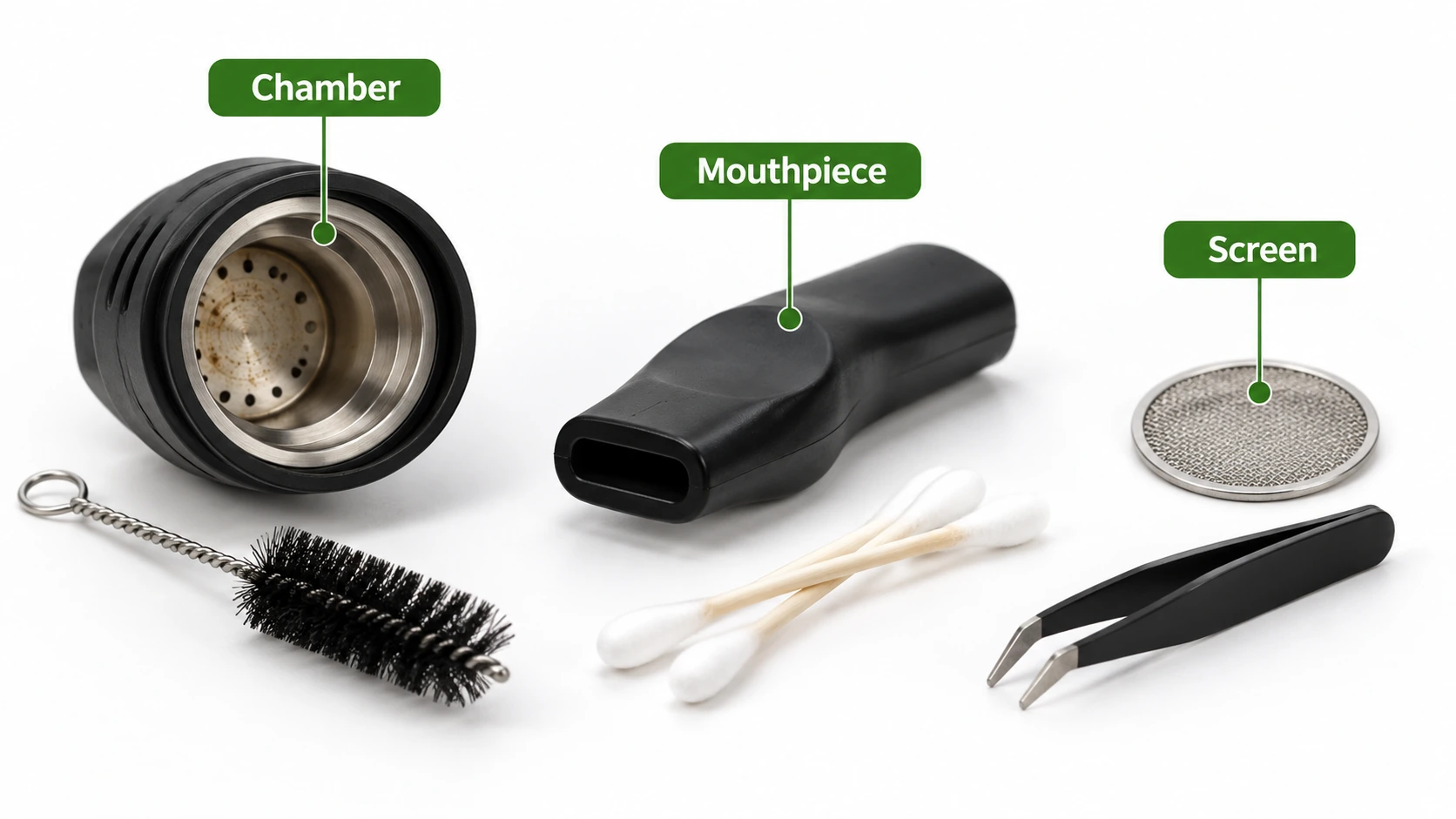
Mouthpieces may be glass, metal, polymer, silicone or a combination with internal seals or screens. Two visually similar pieces can have different heat tolerance and cleaning restrictions. Check the official manual before rinsing, brushing or detaching internal inserts. Never assume a component is dishwasher-safe simply because it is removable, and do not use harsh solvents on an unknown polymer.
Look for signs that care is no longer enough
Inspect for chips, sharp edges, cracks, deformation, discolouration, damaged threads or a seal that no longer sits securely. Transparent parts may reveal damage more clearly than dark plastics, but all materials deserve inspection. A mouthpiece that has fallen onto a hard floor may be unsafe even after cleaning if the material has fractured or the fit changed. Do not file, glue or melt a damaged contact surface as a substitute for a correct replacement.
Keep cleaning separate from electrical repair
Only work on components intended for consumer maintenance and follow any instructions for cooling and drying. Avoid letting wash water migrate into the main body. If a part cannot be detached without force, stop rather than applying more leverage. Record the part number when ordering manufacturer-approved replacements and verify that the material and revision are appropriate for the specific device.
A practical checklist
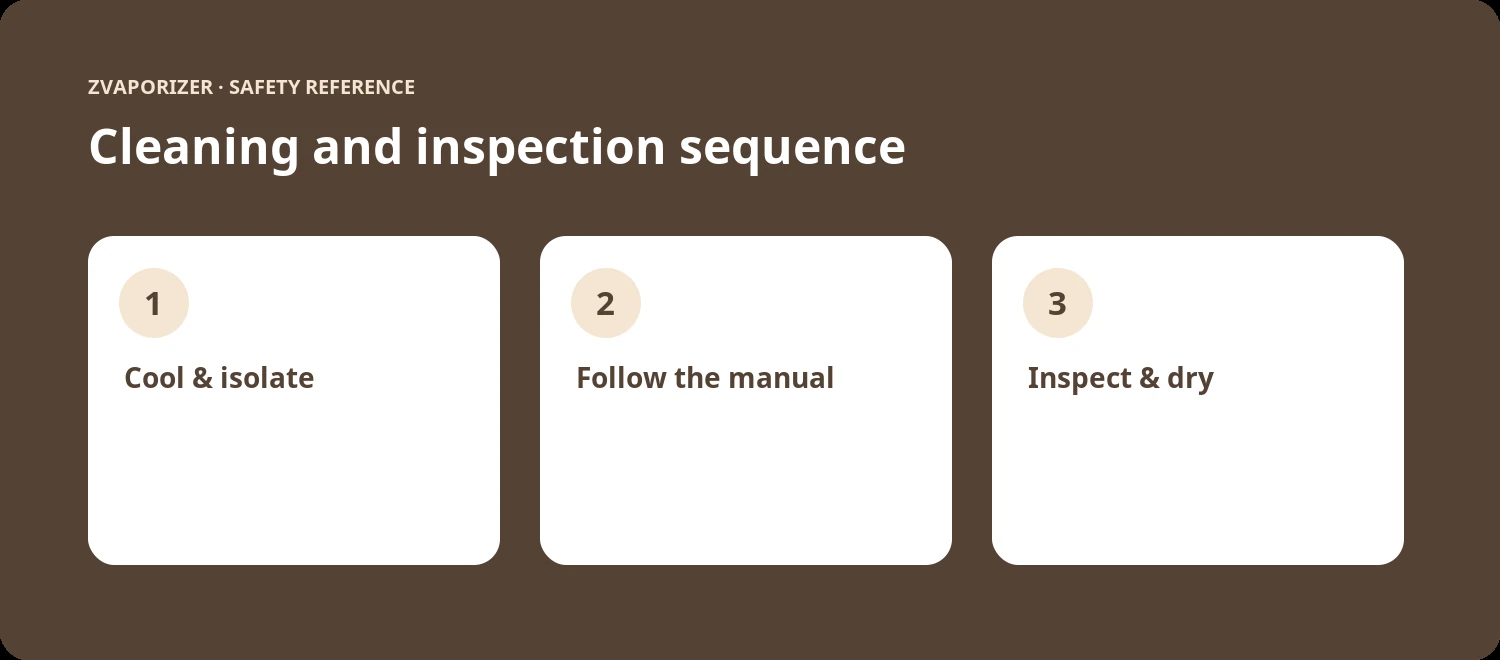
- Confirm the mouthpiece material and official cleaning method.
- Inspect for cracks, sharp edges and damaged seals.
- Dry approved washable parts fully before reassembly.
- Replace damaged parts with verified compatible components.
An everyday situation
A mouthpiece falls onto a tiled floor and appears mostly intact except for a small chipped edge. Washing it will not repair the mechanical damage. The safer approach is to discontinue using that piece and obtain the appropriate replacement, checking model and material rather than relying on a visual match.
A detail worth remembering
Glass, metals and polymers have different cleaning limits. Temperature shocks and unsupported solvents may damage an item even when the first use appears uneventful.
When to stop and seek advice
| What you notice | Sensible response |
|---|---|
| Normal maintenance question | Check the official manual for the exact device model. |
| Possible deterioration or persistent fault | Stop the activity and contact the supplier or manufacturer. |
| Heat, swelling, venting, smoke or fire | Prioritise safety; for an active hazard evacuate and call **000**. |
Frequently asked questions
Can every glass mouthpiece be boiled?
No. Thermal shock, inserts and seals may make boiling unsuitable; use the manufacturer’s instructions.
Is a tiny chip acceptable?
A chip may create a sharp edge or indicate a wider crack. Stop using the damaged part and seek a correct replacement.
Related reading
- Vaporiser Device Safety & Maintenance Explained
- Cleaning Electronic Devices: General Safety Principles
- Why Manufacturers Specify Cleaning Materials
- Lithium-Ion Battery Safety in Portable Devices
Sources and further information
This general safety information does not replace a manufacturer’s instructions or an emergency service’s advice. It does not establish the permitted supply, advertising or use of any particular vaping good in Australia.