
In this article
Different components respond differentlyConcentration and residue matterHow to verify an unfamiliar productA practical checklistAn everyday situationA detail worth rememberingWhen to stop and seek adviceFrequently asked questionsIs isopropyl alcohol suitable for every mouthpiece?Is hot water always harmless to silicone seals?Related readingSources and further informationRelated articles
Material compatibility explains why “one cleaning method for every device” can be misleading.
At a glance: Identify which material is being cleaned. Match the cleaner and dilution to the manufacturer’s instructions.
Different components respond differently
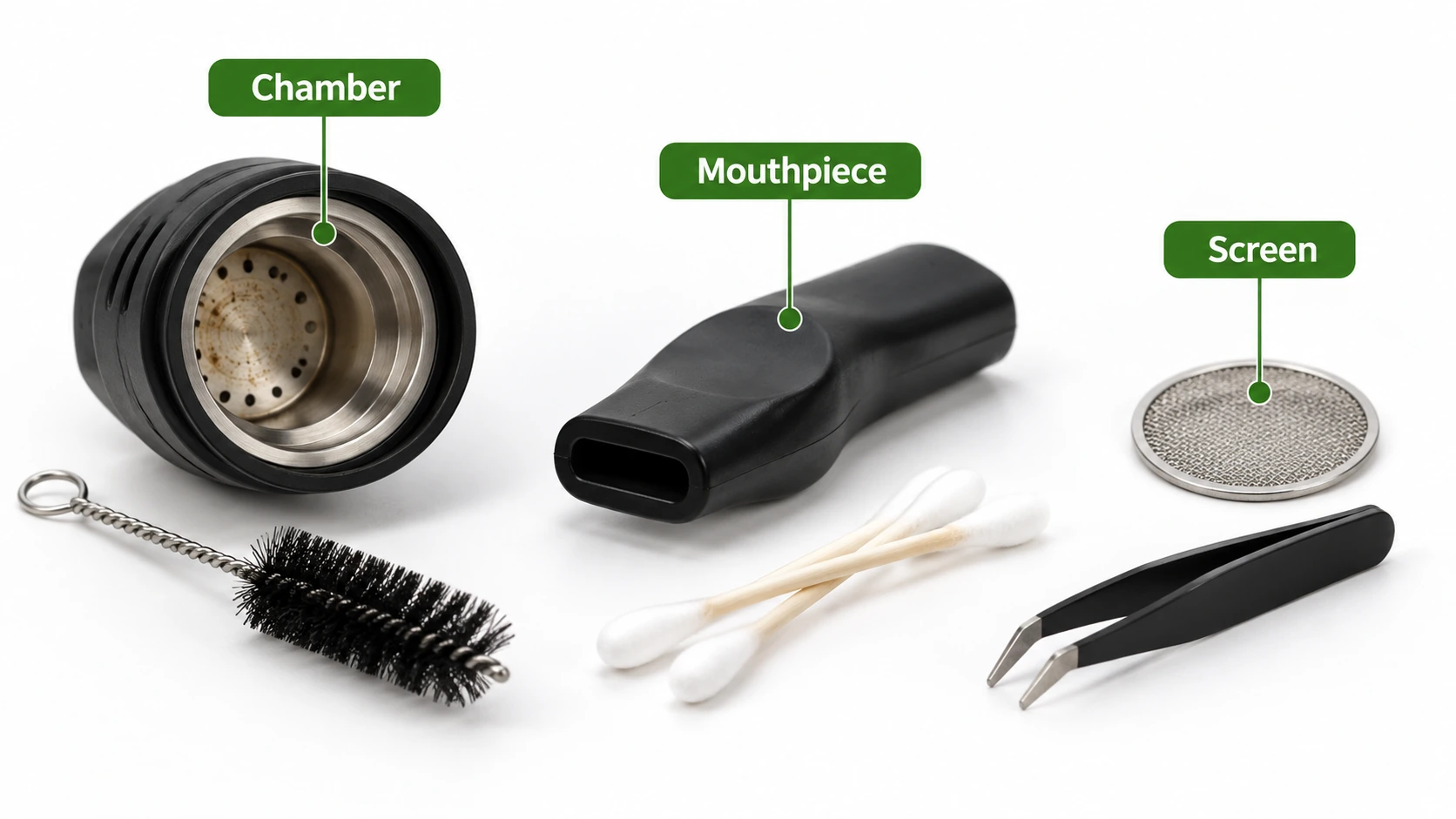
Ceramics, stainless steel, silicone, painted alloys, transparent plastics and adhesives may all be present in a compact device. A substance safe for one material may discolour, swell, embrittle or loosen another. The concentration of a cleaner, contact time and temperature are also important. Manufacturer instructions should specify approved products or methods for each removable part, including any rinsing or drying step.
Concentration and residue matter
A cleaning agent is not automatically safe simply because it evaporates quickly. Some chemicals may leave residues; others can damage seals or crack plastics under stress. Avoid mixing cleaning agents or creating improvised solutions. If a part is used near a heated pathway, check whether the maker limits the type of cleaner or requires a complete rinse before use. Never use a chemical on an electrical assembly while it is powered.
How to verify an unfamiliar product
Identify the part material if known, locate the latest official cleaning instructions and check whether the proposed agent is expressly supported. When the material cannot be confirmed, avoid experimentation. If cleaning changes colour, texture, fit or elasticity, stop using the affected component until it is assessed. A product label that says “general purpose” is not proof that it suits the specific device or its seals.
A practical checklist
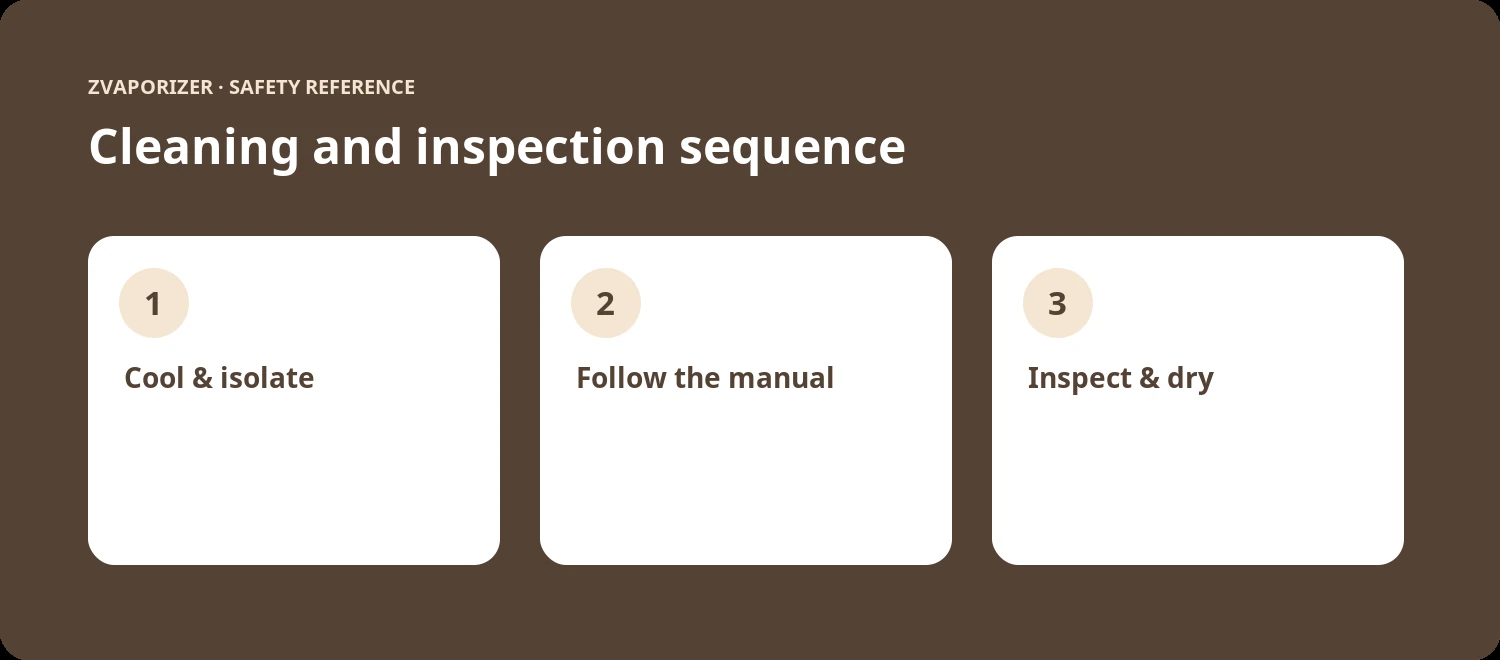
- Identify which material is being cleaned.
- Match the cleaner and dilution to the manufacturer’s instructions.
- Observe required rinse, dry and reassembly steps.
- Replace parts altered by incompatible chemicals rather than forcing reuse.
An everyday situation
A cleaning video recommends a strong solvent for every part, while the device manual only permits it on a specific metal insert. The user checks the instructions and selects the documented method rather than extending the advice to seals and coated plastics. A material-safe choice for one piece is not necessarily safe for its neighbours.
A detail worth remembering
Compatibility depends on the actual substance, concentration, contact time and component material. General labels such as 'food safe' or 'fast evaporating' cannot replace device instructions.
When to stop and seek advice
| What you notice | Sensible response |
|---|---|
| Normal maintenance question | Check the official manual for the exact device model. |
| Possible deterioration or persistent fault | Stop the activity and contact the supplier or manufacturer. |
| Heat, swelling, venting, smoke or fire | Prioritise safety; for an active hazard evacuate and call **000**. |
Frequently asked questions
Is isopropyl alcohol suitable for every mouthpiece?
No. Suitability depends on material, concentration and device-specific instructions.
Is hot water always harmless to silicone seals?
No. Heat and detergents can affect materials and dimensions; use the method specified by the manufacturer.
Related reading
- Vaporiser Device Safety & Maintenance Explained
- Cleaning Electronic Devices: General Safety Principles
- Inspecting Seals and Gaskets for Wear
- Lithium-Ion Battery Safety in Portable Devices
Sources and further information
This general safety information does not replace a manufacturer’s instructions or an emergency service’s advice. It does not establish the permitted supply, advertising or use of any particular vaping good in Australia.