
In this article
The best place is cool, dry and out of reachPrepare the device before putting it awayLong-term storage needs periodic checksA practical checklistAn everyday situationA detail worth rememberingWhen to stop and seek adviceFrequently asked questionsCan I leave a device in a parked car?Should I always store a battery fully charged?Related readingSources and further informationRelated articles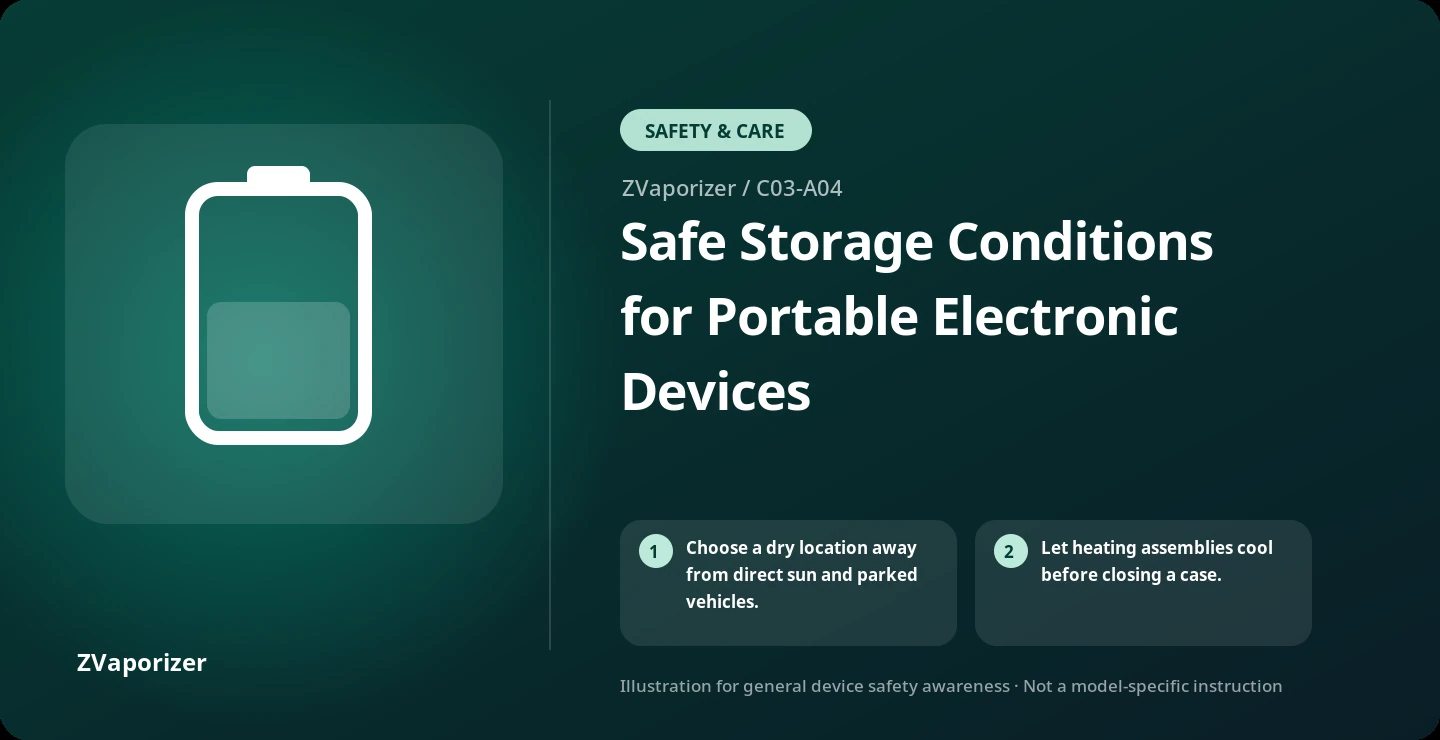
Heat, direct sunlight, humidity and accidental activation are everyday storage risks for small electronics.
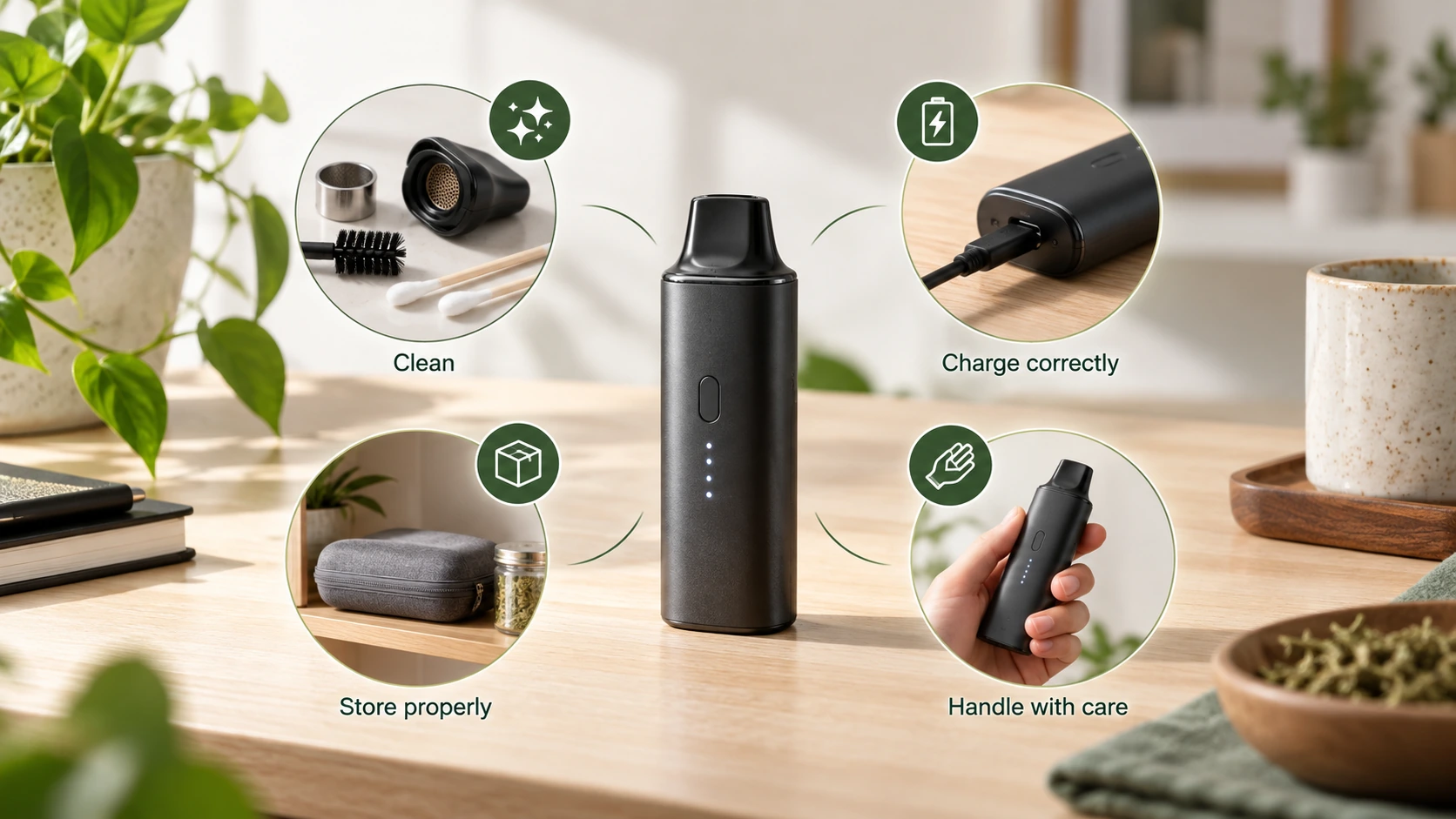
At a glance: Choose a dry location away from direct sun and parked vehicles. Let heating assemblies cool before closing a case.
The best place is cool, dry and out of reach
Store portable electronics away from direct sun, heaters, wet benches and hot vehicles. Place them where children and pets cannot access batteries or detachable small parts. A closed car can become very hot even when outdoor conditions feel mild. If a device has a removable battery, follow its manual on whether to remove it for extended storage and how to protect exposed contacts from metal objects.
Prepare the device before putting it away
Allow heated parts to cool completely. Turn the device off—not merely to standby—if this is the maker’s requirement. Clean and dry only the areas identified as user-serviceable in the instructions. Avoid enclosing residual moisture in a case. Do not store charging cables in a way that puts continuous force on the port, and do not leave a device plugged into a wall adaptor for weeks unless its manual specifically provides for that.
Long-term storage needs periodic checks
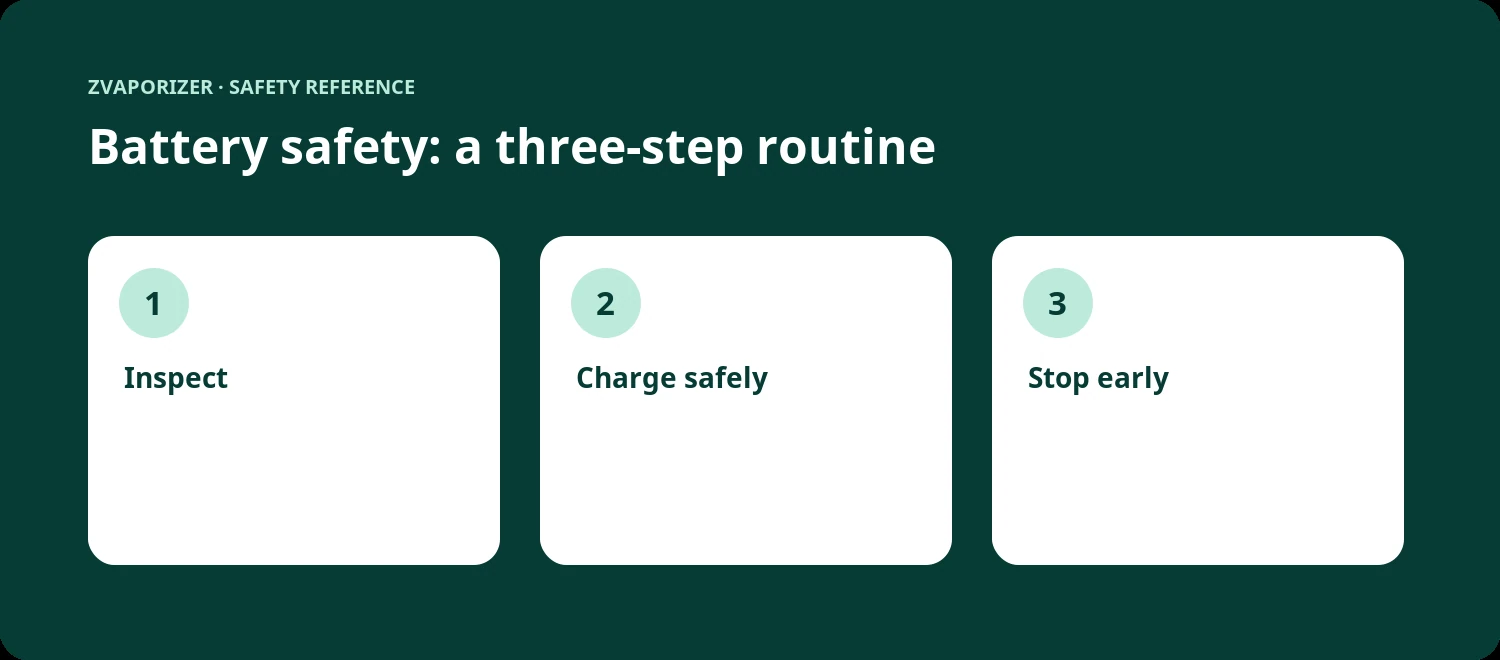
Battery state-of-charge recommendations vary between manufacturers and chemistries. Rather than assuming every product needs a universal storage percentage, check the exact manual. Periodically look for swelling, odour, corrosion, damaged seals or an enclosure that no longer closes correctly. If there is evidence of battery failure, stop the inspection without charging the device and seek appropriate safety advice. Store away from exits so a fire does not obstruct evacuation.
A practical checklist
- Choose a dry location away from direct sun and parked vehicles.
- Let heating assemblies cool before closing a case.
- Prevent accidental activation and metal contact with loose batteries.
- Follow the manufacturer’s long-term battery storage directions.
An everyday situation
A device is placed in the centre console of a parked car. The cabin heats in direct sunlight, exposing the battery to conditions very different from a cool indoor room. The correct long-term habit is to bring lithium-powered electronics out of the vehicle and store them according to the published temperature guidance.
A detail worth remembering
Extended storage can change the battery’s condition. Do not assume that charging it immediately after months in storage is appropriate; inspect first and consult the correct manual.
When to stop and seek advice
| What you notice | Sensible response |
|---|---|
| Normal maintenance question | Check the official manual for the exact device model. |
| Possible deterioration or persistent fault | Stop the activity and contact the supplier or manufacturer. |
| Heat, swelling, venting, smoke or fire | Prioritise safety; for an active hazard evacuate and call **000**. |
Frequently asked questions
Can I leave a device in a parked car?
The ACCC advises against leaving lithium-ion products in hot places, including parked vehicles.
Should I always store a battery fully charged?
Not necessarily. Follow the maker’s storage guidance for the exact battery and product.
Related reading
- Vaporiser Device Safety & Maintenance Explained
- Lithium-Ion Battery Safety in Portable Devices
- Signs of Battery Damage and When to Stop Using a Device
- How to Read a Device Safety Manual
Sources and further information
This general safety information does not replace a manufacturer’s instructions or an emergency service’s advice. It does not establish the permitted supply, advertising or use of any particular vaping good in Australia.