
In this article
Know the visible signsWhat to do when you notice a problemWhy damage history mattersA practical checklistAn everyday situationA detail worth rememberingWhen to stop and seek adviceFrequently asked questionsCan a damaged battery still hold a charge?Can I put a swollen battery in a regular recycling box?Related readingSources and further informationRelated articles
Swelling, venting, unusual odours and heat are reasons to stop—not signals to keep testing a battery.
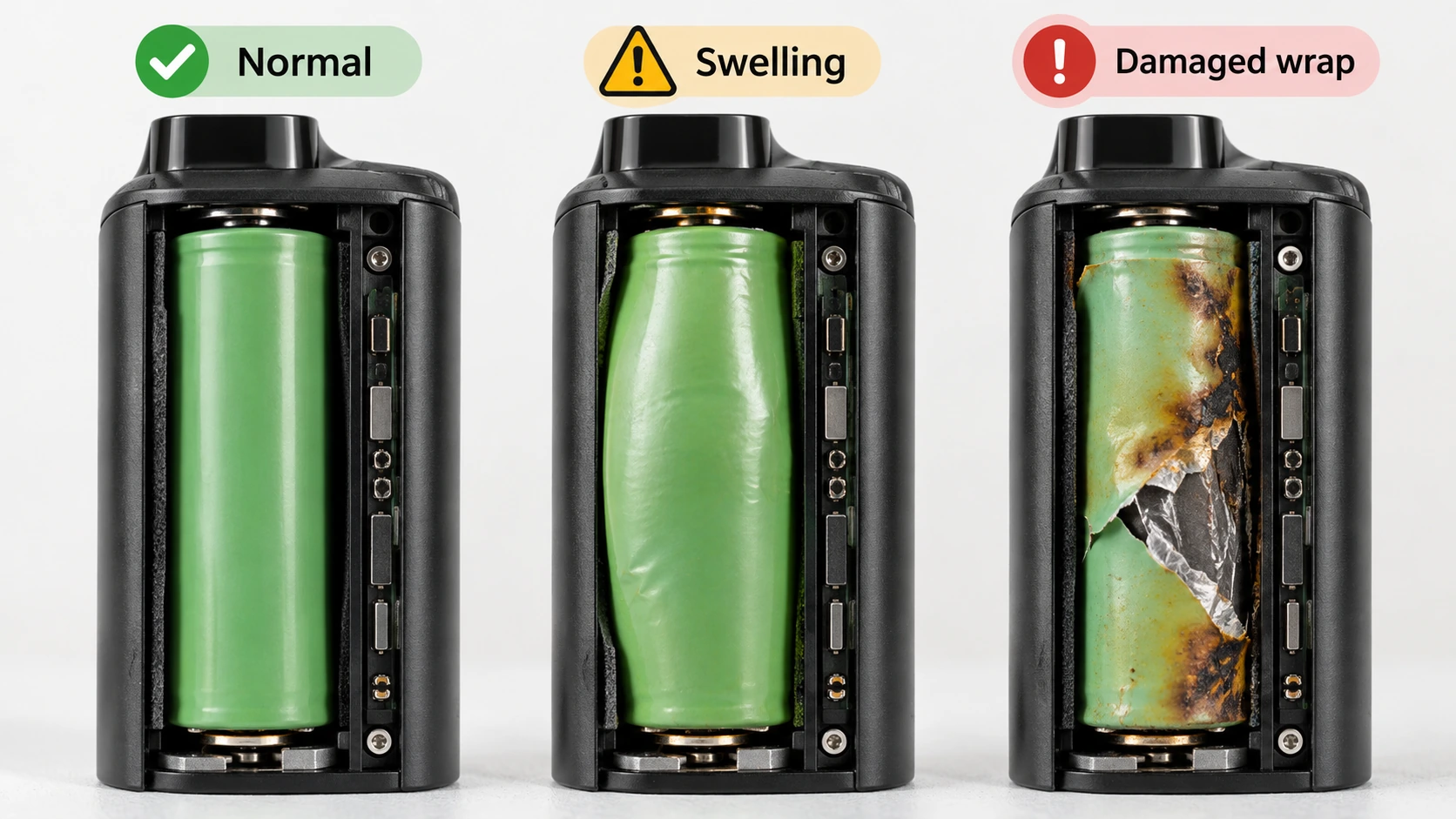
At a glance: Inspect swelling, deformation, cracks and leaks without pressing on the case. Stop using or charging if abnormal heat, odour or noise develops.
Know the visible signs
Changes in battery shape, a lifting casing seam, cracks, crushed edges, liquid residue or melted plastic are warning signs. A damaged battery can be unsafe even when there is no obvious smoke. A hissing or popping sound, chemical-like smell, rapid temperature rise or escaping vapour should be treated as a more urgent hazard. Manufacturers may describe some heat during normal operation, but that does not make sudden, excessive or unexpected heat acceptable.
What to do when you notice a problem
Stop operation and charging as soon as it is safe. Do not press a swollen enclosure back into shape, seal an expanding battery with tape, immerse the device in water or continue charging to see whether it improves. If a device is actively smoking, venting or burning, evacuate and call 000. For a non-emergency damaged battery, avoid routine rubbish and standard battery-drop bins; seek advice from your council or waste facility before transporting it.
Why damage history matters
A fall, crush event, moisture exposure or use of an incorrect charger can damage components without producing an immediate fault. Make a note of what happened, approximately when it occurred and any behaviour that changed afterwards. The decision to have an item assessed should be based on safety warnings, not simply on whether the display turns on. If the battery is integrated, do not attempt to prise it out unless the manufacturer explicitly designed the product for user replacement.
A practical checklist
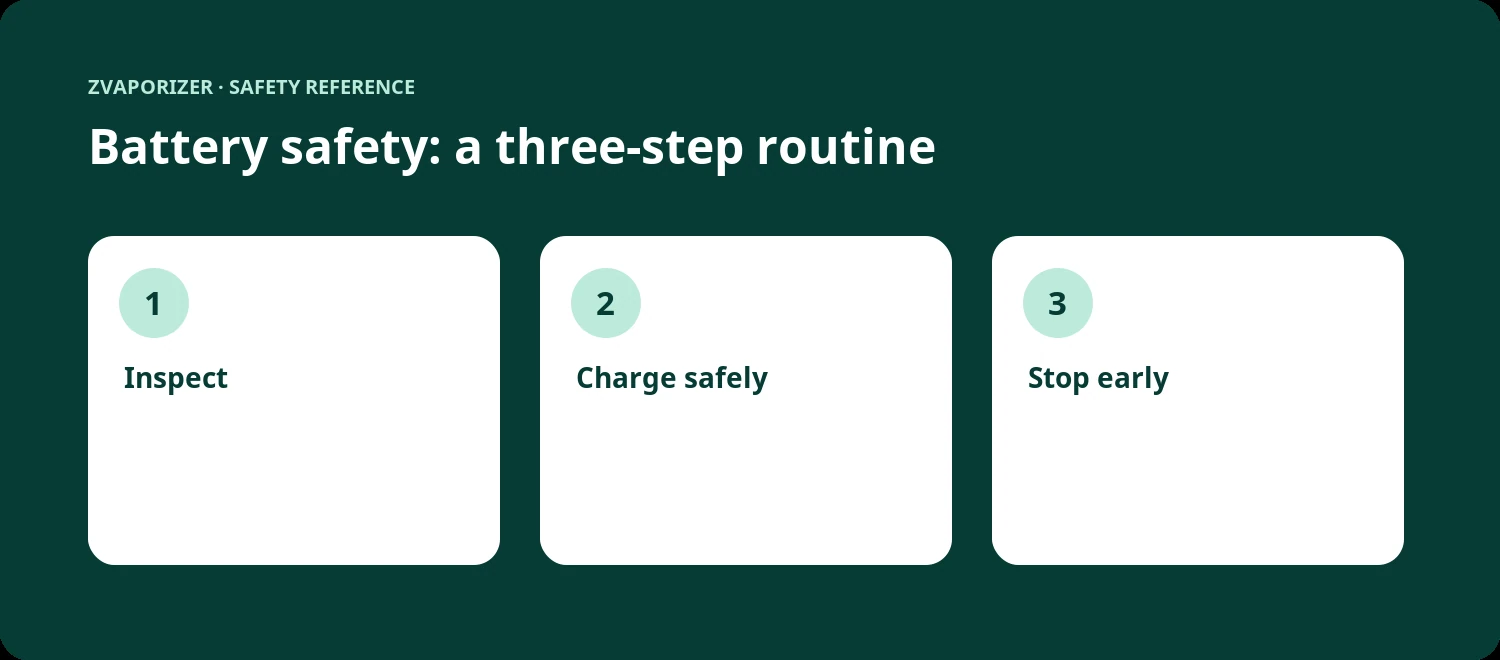
- Inspect swelling, deformation, cracks and leaks without pressing on the case.
- Stop using or charging if abnormal heat, odour or noise develops.
- Keep people away from a smoking or venting device; call 000.
- Ask local authorities about disposal of damaged batteries.
An everyday situation
After a drop, a casing seam begins to separate. It may be tempting to press the seam shut and see whether the unit powers on. That is exactly the wrong experiment where a lithium battery could be swollen or damaged. The safer choice is to stop using the device, keep it away from people and combustible materials, and seek appropriate advice.
A detail worth remembering
A swelling diagnosis should never depend on pressing or squeezing a battery housing. External shape changes are an observation to report, not a repair task for the owner.
When to stop and seek advice
| What you notice | Sensible response |
|---|---|
| Normal maintenance question | Check the official manual for the exact device model. |
| Possible deterioration or persistent fault | Stop the activity and contact the supplier or manufacturer. |
| Heat, swelling, venting, smoke or fire | Prioritise safety; for an active hazard evacuate and call **000**. |
Frequently asked questions
Can a damaged battery still hold a charge?
Yes. Holding a charge does not demonstrate safety; damaged cells can continue operating before failure.
Can I put a swollen battery in a regular recycling box?
No. B-cycle directs consumers with badly damaged or swollen batteries to contact councils or transfer stations, not ordinary drop-off points.
Related reading
- Vaporiser Device Safety & Maintenance Explained
- Lithium-Ion Battery Safety in Portable Devices
- Charging Safety and Manufacturer Instructions
- How to Read a Device Safety Manual
Sources and further information
This general safety information does not replace a manufacturer’s instructions or an emergency service’s advice. It does not establish the permitted supply, advertising or use of any particular vaping good in Australia.